
- Home
- Articles
- What Are the Heavenly Stems and Earthly Branches? Lookup Table and How to Calculate Them
Culture
What Are the Heavenly Stems and Earthly Branches? Lookup Table and How to Calculate Them

In the traditional calendar, names like Jia Zi, Yi Chou, Bing Yin or Ding Mao are quite familiar. They are used to identify birth years, record dates, read the lunar calendar and study traditional methods of interpretation. Behind these names is the system of Heavenly Stems and Earthly Branches, a way of reckoning time with a history of more than two thousand years.
Beyond naming years, stem-branches are also applied to months, days and hours. In particular, combining the 10 Heavenly Stems and 12 Earthly Branches produces a cycle of 60 pairs, usually called the sixty-year Jiazi cycle. Understanding how this system works makes looking up the calendar, the five elements and feng shui knowledge much clearer.
What are the Heavenly Stems and Earthly Branches?
The Heavenly Stems and Earthly Branches, or stem-branches for short, are a traditional system of time notation consisting of 10 Heavenly Stems and 12 Earthly Branches, combined in a cyclical pattern to form 60 different pairs.
The stem-branch system is ancient and is still used today to name the years of the lunar zodiac.
In the calendar, stem-branches act as a cyclical naming system for units of time. For example, 2024 is called Jia Chen, 2025 Yi Si and 2026 Bing Wu.
The Heavenly Stems and Earthly Branches are also tied to the theory of Yin-Yang and the Five Elements. In the traditional explanation, the Heavenly Stems represent the laws of heaven, while the Earthly Branches express the cyclical nature of time and phenomena tied to the earth.
However, the time-naming system should be distinguished from feng shui interpretations. The pattern of the 60 stem-branches can be determined mathematically, while meanings of good fortune, compatibility and destiny belong to traditional belief.
What are the 10 Heavenly Stems?
The Heavenly Stems, also called the Ten Heavenly Stems, consist of 10 symbols in a fixed order: Jia, Yi, Bing, Ding, Wu, Ji, Geng, Xin, Ren and Gui.
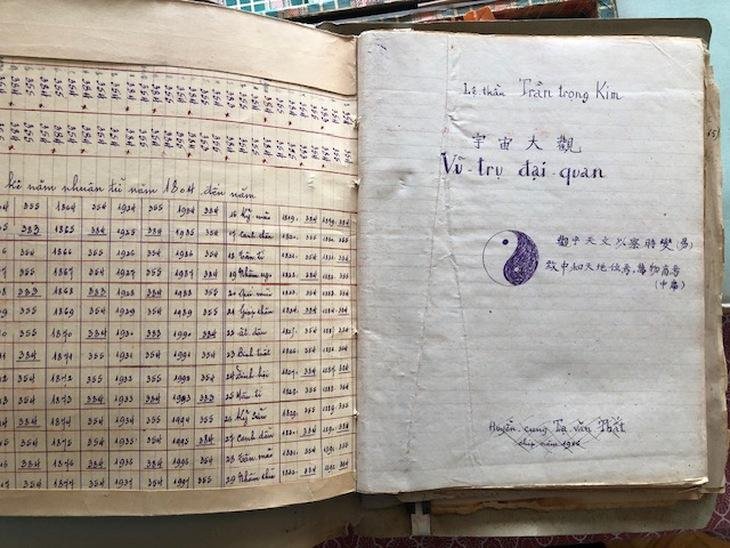
Each Heavenly Stem has two basic characteristics: its Yin-Yang polarity and its corresponding element among the Five Elements.
The stems in odd positions are Yang, while those in even positions are Yin.
Table of the 10 Heavenly Stems by Yin-Yang and Five Elements
| Order | Heavenly Stem | Yin-Yang | Five Elements |
| 1 | Jia | Yang | Wood |
| 2 | Yi | Yin | Wood |
| 3 | Bing | Yang | Fire |
| 4 | Ding | Yin | Fire |
| 5 | Wu | Yang | Earth |
| 6 | Ji | Yin | Earth |
| 7 | Geng | Yang | Metal |
| 8 | Xin | Yin | Metal |
| 9 | Ren | Yang | Water |
| 10 | Gui | Yin | Water |
The table shows that each element appears in two consecutive Heavenly Stems, one Yang and one Yin.
For example, Jia and Yi both belong to Wood, but Jia is Yang while Yi is Yin. Likewise, Bing and Ding belong to Fire, and Geng and Xin to Metal.
In Yin-Yang thought, Yang is usually associated with initiative, growth and outward expression. Yin leans toward receptivity, nourishment and inner movement.
This division forms the basic principles for interpreting interactions between the stems, but it is not a scientific basis for determining a person’s character or destiny.
The 12 Earthly Branches and their link with the 12 zodiac animals
While there are 10 Heavenly Stems, there are 12 Earthly Branches: Zi, Chou, Yin, Mao, Chen, Si, Wu, Wei, Shen, You, Xu and Hai.
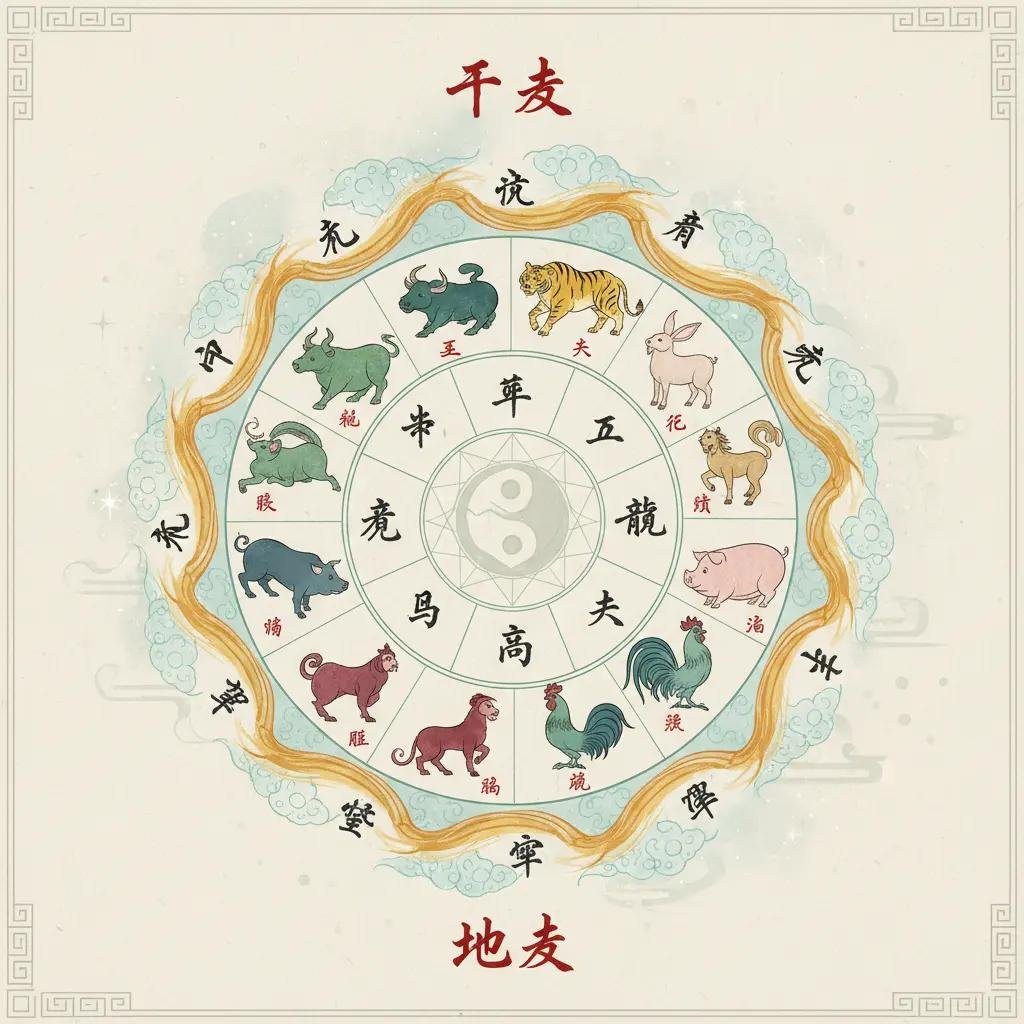
Each Earthly Branch corresponds to a zodiac animal. This is the basis for familiar expressions such as being born in the year of the Rat, Ox or Tiger.
Table of the 12 Earthly Branches by zodiac animal and Yin-Yang
| Order | Earthly branch | Zodiac animal | Yin-Yang |
| 1 | Rat | Rat | Yang |
| 2 | Ox | Ox | Yin |
| 3 | Tiger | Tiger | Yang |
| 4 | Cat | Cat | Yin |
| 5 | Dragon | Dragon | Yang |
| 6 | Snake | Snake | Yin |
| 7 | Horse | Horse | Yang |
| 8 | Goat | Goat | Yin |
| 9 | Monkey | Monkey | Yang |
| 10 | Rooster | Rooster | Yin |
| 11 | Dog | Dog | Yang |
| 12 | Pig | Pig | Yin |
There is an interesting difference between zodiac traditions. Most traditions, and this site, use the Rabbit for the Mao branch; a few use the Cat.
The difference lies in the animal symbol in each culture; it does not change the position of the Mao branch in the cycle.
Besides representing zodiac animals, the Earthly Branches are also used to divide the 12 months of the year and the 12 periods of a day and night.
How the Heavenly Stems and Earthly Branches are combined
The most important point of the stem-branch system lies in how two cycles of different lengths are paired.
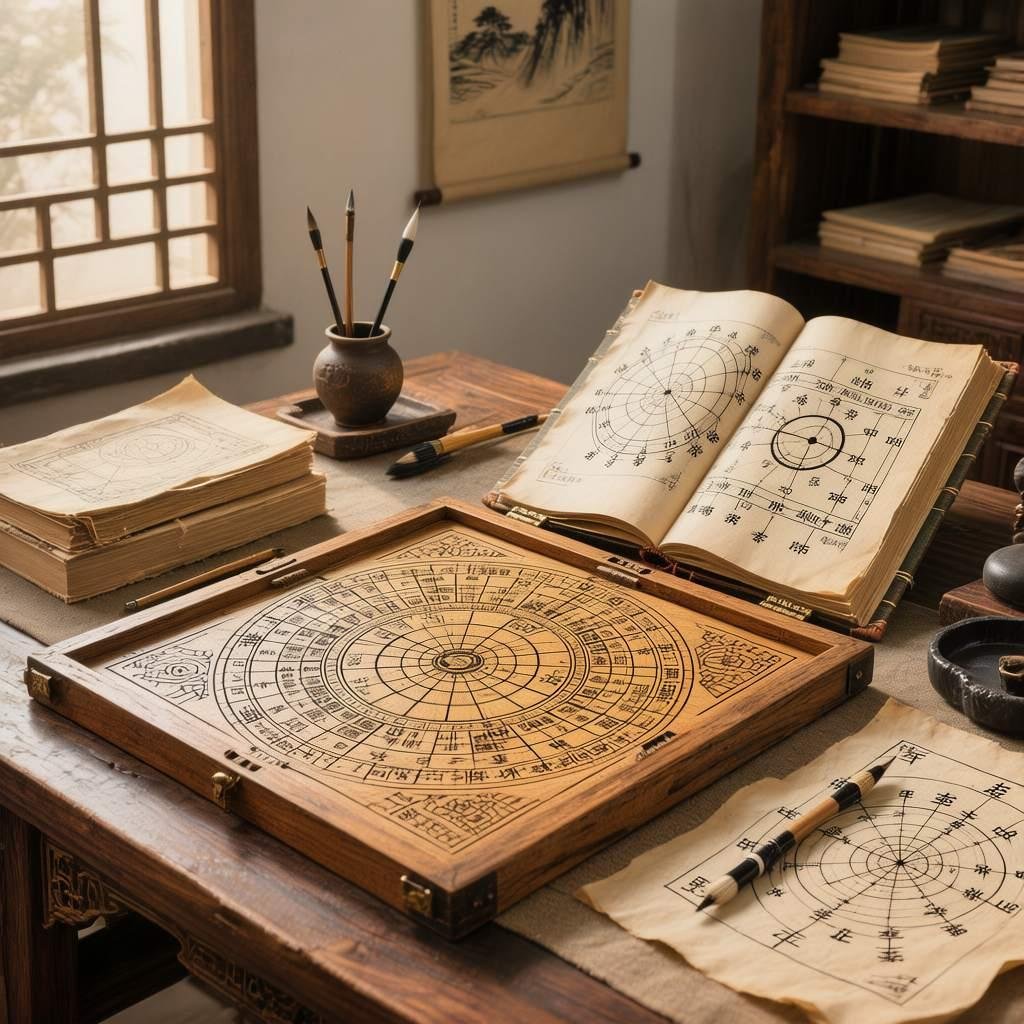
The Heavenly Stems run in a cycle of 10, and the Earthly Branches in a cycle of 12. Starting from Jia Zi, the stem and branch both advance one step at a time.
After Jia Zi comes Yi Chou, then Bing Yin, Ding Mao, Wu Chen and so on.
When the 10 stems complete one round, the system returns to Jia but the branch has not yet returned to Zi. So the 11th pair is Jia Xu, not Jia Zi.
Only when both cycles complete a whole number of rounds together does the original pair reappear.
How the sixty-year Jiazi cycle is formed
| 10 Heavenly Stems | 12 Earthly Branches | 60 Valid pairs |
60 is the least common multiple of 10 and 12. After 60 steps, both the stem and the branch return to their starting positions.
The same-polarity rule for pairing stems and branches
Not every Heavenly Stem can be paired with every Earthly Branch.
By the system’s rule, Yang stems pair only with Yang branches and Yin stems only with Yin branches. So pairs such as Jia Chou or Yi Zi do not exist in the sixty-year Jiazi table.
Multiplying 10 × 12 gives 120 mathematical combinations. However, because of sequential pairing and matching Yin-Yang polarity, only 60 pairs are used.
This principle helps you check whether a stem-branch name follows the rules.
What is the sixty-year Jiazi cycle?
The sixty-year Jiazi cycle is the name of the cycle of 60 stem-branch pairs, starting with Jia Zi and ending with Gui Hai.
In counting years, a stem-branch name reappears every 60 years. For example, 1966 and 2026 are both Bing Wu, while 1984 and 2044 are both Jia Zi.
People of old used the term “one Jiazi” for a 60-year cycle. Hence the age of 60 is also seen as a notable milestone in longevity celebrations.
Complete table of the 60 stem-branches
| Jia Zi | Yi Chou | Bing Yin |
| Ding Mao | Wu Chen | Ji Si |
| Geng Wu | Xin Wei | Ren Shen |
| Gui You | Jia Xu | Yi Hai |
| Bing Zi | Ding Chou | Wu Yin |
| Ji Mao | Geng Chen | Xin Si |
| Ren Wu | Gui Wei | Jia Shen |
| Yi You | Bing Xu | Ding Hai |
| Wu Zi | Ji Chou | Geng Yin |
| Xin Mao | Ren Chen | Gui Si |
| Jia Wu | Yi Wei | Bing Shen |
| Ding You | Wu Xu | Ji Hai |
| Geng Zi | Xin Chou | Ren Yin |
| Gui Mao | Jia Chen | Yi Si |
| Bing Wu | Ding Wei | Wu Shen |
| Ji You | Geng Xu | Xin Hai |
| Ren Zi | Gui Chou | Jia Yin |
| Yi Mao | Bing Chen | Ding Si |
| Wu Wu | Ji Wei | Geng Shen |
| Xin You | Ren Xu | Gui Hai |
The table above shows all 60 pairs in cyclical order. After Gui Hai, the system returns to Jia Zi and starts a new cycle.
How to calculate the stem-branch of a Gregorian year
To find the stem-branch of a year, you don’t need to memorize all 60 pairs. You can use the last digit of the year and a division remainder.
This method works conveniently for ordinary Gregorian years. However, when calculating the stem-branch of a birth year, especially for people born early in the Gregorian year, check when the year changes in the calendar system in use.
Finding the Heavenly Stem from the last digit
The Heavenly Stem of a year is determined by its last digit. For example, years ending in 4 all have the stem Jia; years ending in 6 have the stem Bing.
| Last digit of the year | Heavenly Stem |
| 0 | Geng |
| 1 | Xin |
| 2 | Ren |
| 3 | Gui |
| 4 | Jia |
| 5 | Yi |
| 6 | Bing |
| 7 | Ding |
| 8 | Wu |
| 9 | Ji |
Finding the Earthly Branch by dividing by 12
To find the Earthly Branch, divide the Gregorian year by 12 and look up the remainder in the corresponding table.
| Remainder | Earthly branch | Zodiac animal |
| 0 | Monkey | Monkey |
| 1 | Rooster | Rooster |
| 2 | Dog | Dog |
| 3 | Pig | Pig |
| 4 | Rat | Rat |
| 5 | Ox | Ox |
| 6 | Tiger | Tiger |
| 7 | Cat | Cat |
| 8 | Dragon | Dragon |
| 9 | Snake | Snake |
| 10 | Horse | Horse |
| 11 | Goat | Goat |
Once you have both the Heavenly Stem and the Earthly Branch, simply combine them in the right order: stem first, branch second.
Example: calculating the stem-branch of 2026
2026 ends in 6, corresponding to the Heavenly Stem Bing.
Next, divide 2026 by 12:
2026=12168+10
The remainder is 10, corresponding to the Earthly Branch Wu (Horse).
So 2026 has the stem-branch name Bing Wu.
How to determine the stem-branch of the month, day and hour
The stem-branch system isn’t limited to birth years. In the traditional calendar, stem-branches are also used for months, days and hours, but each unit has its own calculation method.
Stem-branch of the month
In the traditional calendar, the Yin (Tiger) branch usually begins the cycle of months by branch, followed by Mao, Chen, Si and the remaining branches.
The month’s stem is determined from the year’s stem by a specific rule. For example, in a Jia or Ji year the Tiger month begins with Bing Yin; in a Bing or Xin year it begins with Geng Yin.
Note the difference between civil lunar months and months by solar term. In the Four Pillars system, month boundaries are usually set by solar terms, not simply by the first day of the lunar month.
Stem-branch of the day
Day stem-branches run in a continuous 60-day cycle. After a Jia Zi day comes Yi Chou, then Bing Yin, continuing to Gui Hai before returning to Jia Zi.
To determine the stem-branch of a Gregorian date accurately, you need a reliable reference date or a perpetual calendar.
Moving to a new month or year does not automatically restart the 60-day cycle.
Stem-branch of the hour
A day and night are divided into 12 branch hours, each equal to two modern hours.
| Earthly branch | Time range |
| Rat | 23:00–01:00 |
| Ox | 01:00–03:00 |
| Tiger | 03:00–05:00 |
| Cat | 05:00–07:00 |
| Dragon | 07:00–09:00 |
| Snake | 09:00–11:00 |
| Horse | 11:00–13:00 |
| Goat | 13:00–15:00 |
| Monkey | 15:00–17:00 |
| Rooster | 17:00–19:00 |
| Dog | 19:00–21:00 |
| Pig | 21:00–23:00 |
The earthly branch of the hour is determined directly from the time slot. The hour’s heavenly stem, by contrast, depends on the day’s heavenly stem according to the Five Rats rule.
For example, on a Jia day, the Rat hour is called Jia Zi. In the following Ox hour, the stem advances one step to Yi Chou.
So the same branch hour can have a different full stem-branch name from day to day.
How do the Heavenly Stems and Earthly Branches relate to the Five Elements?
Yin-Yang and the Five Elements are two systems of thought used to explain the nature of the stems and branches in many feng shui schools.
The Five Elements are Metal, Wood, Water, Fire and Earth. Each element represents a group of attributes and is interpreted through generating and controlling relationships.
Wood generates Fire, Fire generates Earth, Earth generates Metal, Metal generates Water and Water generates Wood. In the controlling cycle, Wood controls Earth, Earth controls Water, Water controls Fire, Fire controls Metal and Metal controls Wood.
The Five Elements of the 12 Earthly Branches
Besides its zodiac animal, each Earthly Branch has a corresponding main element.
| Five Elements | Earthly branch |
| Wood | Tiger, Cat |
| Fire | Snake, Horse |
| Earth | Dragon, Dog, Ox, Goat |
| Metal | Monkey, Rooster |
| Water | Pig, Rat |
For example, the Yin and Mao branches belong to Wood, while Shen and You belong to Metal.
However, an Earthly Branch is not always read by a single element. In Ba Zi, people also consider the Heavenly Stems hidden within each branch, usually called hidden stems.
This is why, in in-depth study, the five-element relationships between stem-branches can be more complex than the basic attribute table.
How do stem-branches differ from Na Yin elements?
A common source of confusion is the difference between the element of the Heavenly Stem and the Na Yin element of the birth year.
For example, 2026 is Bing Wu. The stem Bing belongs to Fire and the branch Wu also belongs to Fire. Yet the Na Yin of the Bing Wu pair is Heavenly River Water.
This is not an error; the two systems use different principles of classification.
The elements of the stems and branches are determined from the attributes of each symbol. Na Yin, by contrast, is a classification tied to each stem-branch pair in the sixty-year Jiazi cycle.
So you can’t conclude that a year’s Na Yin is Fire just because its stem and branch both belong to Fire.
How are the Heavenly Stems and Earthly Branches used?
Stem-branches appear in many areas, from recording time to customs related to spiritual life.
Identifying ages and birth years
Stem-branches help distinguish people of the same zodiac animal born in different cycles.
For example, people born in 1966 and 2026 are both Bing Wu, while those born in 1990 are Geng Wu. Although they share the Wu (Horse) branch, the Heavenly Stems and Na Yin of these years differ.
Choosing days and hours by custom
Many families use the stem-branch calendar to consult days and hours for weddings, grand openings, groundbreaking or traditional ceremonies.
The choice usually combines many factors such as the stem-branch of the day, month and year and the principles of each day-selection school.
Studying Zi Wei and the Four Pillars
In Zi Wei Dou Shu, the birth year, month, day and hour are key data for setting up a chart by the traditional method.
In the Four Pillars or Ba Zi, the four pillars of year, month, day and hour are each expressed as a stem-branch pair.
Each pillar consists of one stem and one branch, giving eight characters. From these, practitioners analyze Yin-Yang, the Five Elements and the relationships between pillars according to the discipline’s theory.
Exploring harmony and clashes between ages
Concepts such as the Five Stem Combinations, the Six Harmonies, the Three Harmonies and the Six Clashes all arise from the stem-branch system.
They are often used in traditional compatibility checks. However, these relationships are symbolic in feng shui; there is no scientific evidence that they determine harmony, marriage or business results.
Things to note when calculating stem-branches
For beginners, one of the most common mistakes is taking 1 January as the start of the stem-branch year.
In the civil lunar calendar, the new year usually begins at the Lunar New Year. Some destiny systems such as Ba Zi, however, use Start of Spring as the turn of the year.
So people born in January or early February should check their birth date and the system of interpretation carefully.
Also distinguish the stem-branch of the year from that of the day. Both cycles have 60 pairs but they don’t share a starting point in the Gregorian year.
For birth hours, cases close to the boundary between two branch hours also require an accurate time and calendar convention.
Editorial information
 Written byTechnical & Visual Design TeamThe unit that designs visual diagrams and keeps the website secure.
 Reviewed byContent Review BoardThe unit that screens material and verifies its accuracy.
Last updated: 21/11/2026
References
- JAHH 2019 PDF
- Aslaksen, The Mathematics of the Chinese Calendar
- Ho Ngoc Duc, Leipzig University
- UNESCO, Twenty-Four Solar Terms
- Truong Anh Thuan, The Hiep Ky calendar under the Nguyen dynasty
- Smith, Chinese Almanacs (book review)
- Smith, Fortune-tellers and Philosophers (book review)
- Ziwei doushu, Wikipedia
- Bruun, An Introduction to Feng Shui
- Feuchtwang, LSE eprints
- Bourassa & Peng 1999
- Bond, Feng Shui and Condominium Prices
Content follows our editorial standards of Treasure Land Feng Shui. Results are for reference, based on traditional beliefs.
Related articles
What Time Is the Fourth Watch? How People of Old Divided the Night into Five Watches
In traditional lunar-calendar culture, expressions such as “the drum of the third watch”, “awake until the fourth watch” or “the cock crows at the fifth watch” often appear in literature,…
20/11/2026 · 8 min read
Which Elements Suit Willow Wood? Compatible and Clashing Elements and Lucky Colors
In the sixty-year Jiazi cycle, Willow Wood is a Na Yin element with a distinctive image. Not an ancient hardwood tree or a vast forest, Willow Wood represents the willow,…
19/11/2026 · 15 min read
Does Wood Control Earth? Causes and Remedies in the Five Elements
In five-element feng shui, Wood and Earth have a controlling relationship. Wood represents trees, growth and development, while Earth represents land, stability and nourishment. This difference leaves many people unsure…
18/11/2026 · 10 min read