
Chinese Astrology
Are Auspicious Hours and Good Hours the Same? How to Tell Them Apart
When choosing a time for a wedding, grand opening, groundbreaking or journey, many people use two terms: auspicious hours and good hours. Quite a few assume the two are exactly the same, but in practice they differ somewhat in scope and how they are considered.
So are auspicious hours and good hours the same? Auspicious hours can be seen as a kind of good hour determined by the traditional calendar. Good hours, on the other hand, are a broader concept that can also include choosing a time to suit each person’s age, element and specific purpose.
1. Are auspicious hours and good hours the same?
Auspicious hours and good hours are closely related, but they are not always fully synonymous.
Auspicious (Yellow Path) hours are time slots identified as favorable by the traditional method of choosing days and hours. The classification is based on the calendar system, stem-branches and the deities of each day.
Good hours is a broader term for periods judged suitable or favorable for doing something. Besides consulting auspicious hours, people may also consider the age of the person involved, the nature of the task and related feng shui factors.
They can be distinguished as follows:
- Auspicious hours are a group of good hours determined by the traditional calendar system.
- Good hours are a general concept and may be chosen by day, by age or by the purpose of the task.
- An auspicious hour may not be the best time for everyone if age and clashes are also considered.
So if you consider only the traditional calendar’s classification of hours in a day, auspicious hours are good hours. But when choosing a time for a particular person or task, the scope of consideration may be broader.
2. What auspicious hours and good hours have in common
The two concepts share some features in the custom of choosing days and hours.
2.1. Both are used to choose a favorable time
Both auspicious hours and good hours are used in the hope of choosing a suitable time to begin something. In folk belief, choosing a fine hour gives people more peace of mind when undertaking important matters.
2.2. Both are tied to the Eastern calendar
Determining auspicious hours and many methods of finding good hours are usually linked with the lunar calendar, stem-branches, earthly branches and the system of deities.
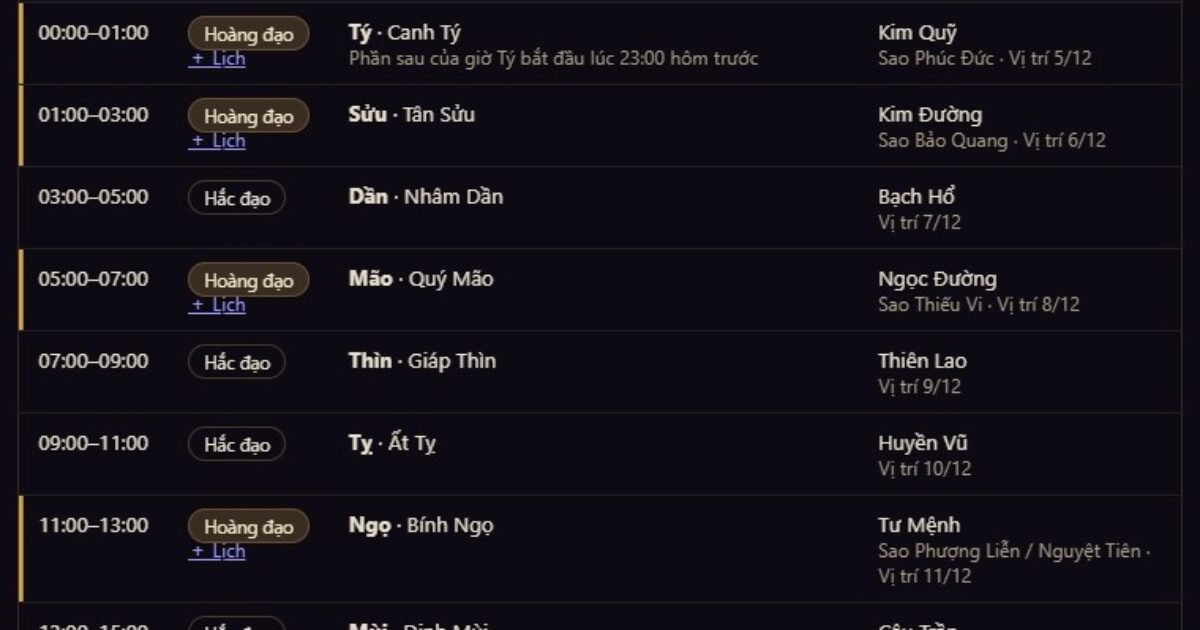
Each day is divided into 12 double-hours corresponding to the 12 earthly branches. Each double-hour lasts about two hours in modern time.
2.3. Both are applied to important matters
Some activities for which people usually check the hour beforehand include:
- Weddings and marriage ceremonies.
- Opening a shop or business.
- Groundbreaking and building a house.
- Moving into a new home.
- Setting out on a journey.
- Signing a contract or starting important work.
Depending on family custom and personal belief, how much attention is paid to the hour may vary.
3. How auspicious hours and good hours differ
The main difference lies in the scope of determination and the factors used when choosing a time.
| Criterion | Auspicious (Yellow Path) hour | Good hours |
| Scope of the concept | A group of hours classified by the traditional calendar | A general concept of a favorable time |
| Basis of consideration | Lunar date, earthly branch and the system of deities | May consider the day, age, stem-branch and purpose of the task |
| Applicability | Usually determined day by day | May be general or personalized |
| Subject | Time slots classified by day | May be chosen individually for each person |
| Purpose | Identify the times considered auspicious within the day | Find a time that suits a specific task |
For example, a day has an auspicious hour from 7 to 9 a.m. This period is classed as favorable by the traditional method of choosing hours. However, if the person carrying out the task wants to consider age and clashes in feng shui terms, they can go on to check these factors before deciding.
So auspicious hours are the initial reference, while choosing a good hour for a particular person may need an extra step of interpretation.
4. How are auspicious hours determined?
In traditional hour selection, a day is divided into 12 double-hours, each corresponding to an earthly branch:
| Earthly branch | Hour name | Time span |
| Rat | Rat hour | 23:00 – 01:00 |
| Ox | Ox hour | 01:00 – 03:00 |
| Tiger | Tiger hour | 03:00 – 05:00 |
| Cat | Cat hour | 05:00 – 07:00 |
| Dragon | Dragon hour | 07:00 – 09:00 |
| Snake | Snake hour | 09:00 – 11:00 |
| Horse | Horse hour | 11:00 – 13:00 |
| Goat | Goat hour | 13:00 – 15:00 |
| Monkey | Monkey hour | 15:00 – 17:00 |
| Rooster | Rooster hour | 17:00 – 19:00 |
| Dog | Dog hour | 19:00 – 21:00 |
| Pig | Pig hour | 21:00 – 23:00 |
In the auspicious-hour system, the double-hours are divided into two groups: Yellow Path and Black Path. In the common classification, each day has six Yellow Path and six Black Path hours.
The six names commonly found in the auspicious-hour system are:
- Green Dragon.
- Bright Hall.
- Golden Coffer.
- Golden Hall.
- Jade Hall.
- Life Governor.
Which hours are Yellow Path must be determined from the specific day; one fixed list of hours cannot be applied to every day.
5. Do auspicious hours need to match your age?
This is a common concern when choosing a time for an important undertaking.
If you only check auspicious hours by the calendar, you can look up the slots classed as good for the day. However, some feng shui methods of choosing hours also check the age of the person involved to consider compatibility between age and timing.
The factors usually consulted include:
- Earthly branch of the age: Consider the combining or clashing relationship between the person’s branch and the hour’s branch.
- Three Harmonies: Consult the relationship between branches in the same Three Harmonies group.
- Six Harmonies: Consider pairs of branches that form a Six Harmonies combination in the stem-branch system.
- Four clashes: Note the clashing relationships in traditional belief.
- Purpose of the task: Consider the nature of what needs to be done, since the way of choosing a time may differ case by case.
Not every school uses the same calculation or gives each factor the same weight. So age compatibility should be seen as a supplementary reference step, not the sole condition for judging whether an hour is good or bad.
Conclusion
Auspicious hours and good hours are related but not fully identical in scope. Auspicious hours are the group of hours determined by the traditional calendar for each day, while good hours are a broader concept that may also involve checking age and the purpose of the task.
When you need to choose a favorable time, you can start by looking up the auspicious hours, then weigh personal factors and practical conditions. What matters is understanding each concept correctly and not equating looking up a fine hour with a guarantee of the outcome.
Editorial information
 Written byTechnical & Visual Design TeamThe unit that designs visual diagrams and keeps the website secure.
 Reviewed byContent Review BoardThe unit that screens material and verifies its accuracy.
Last updated: 21/11/2026
References
- JAHH 2019 PDF
- Aslaksen, The Mathematics of the Chinese Calendar
- Ho Ngoc Duc, Leipzig University
- UNESCO, Twenty-Four Solar Terms
- Truong Anh Thuan, The Hiep Ky calendar under the Nguyen dynasty
- Smith, Chinese Almanacs (book review)
- Smith, Fortune-tellers and Philosophers (book review)
- Ziwei doushu, Wikipedia
- Bruun, An Introduction to Feng Shui
- Feuchtwang, LSE eprints
- Bourassa & Peng 1999
- Bond, Feng Shui and Condominium Prices
Content follows our editorial standards of Treasure Land Feng Shui. Results are for reference, based on traditional beliefs.
Related articles
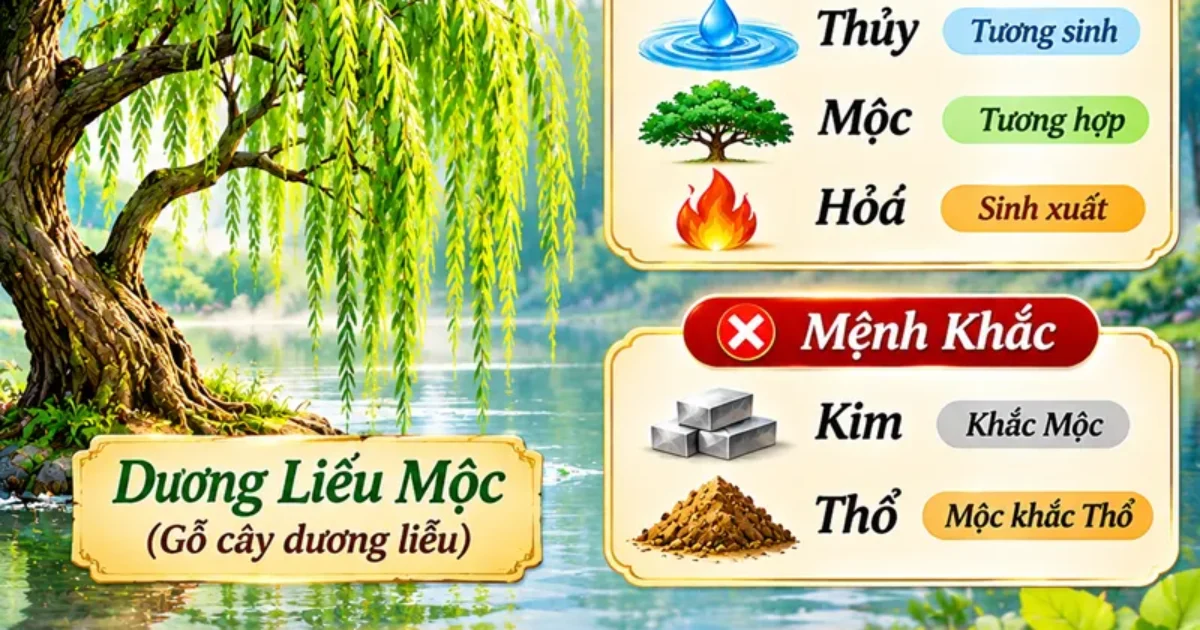
Which Elements Suit Willow Wood? Compatible and Clashing Elements and Lucky Colors
In the sixty-year Jiazi cycle, Willow Wood is a Na Yin element with a distinctive image. Not an ancient hardwood tree or a vast forest, Willow Wood represents the willow,…
19/11/2026 · 15 min read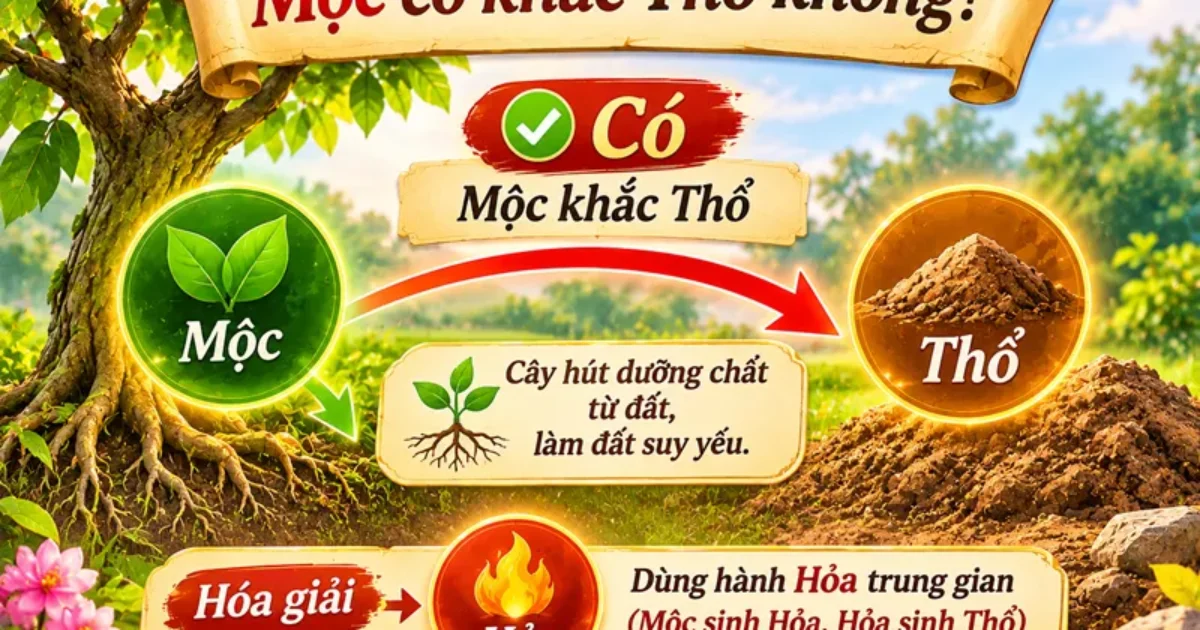
Does Wood Control Earth? Causes and Remedies in the Five Elements
In five-element feng shui, Wood and Earth have a controlling relationship. Wood represents trees, growth and development, while Earth represents land, stability and nourishment. This difference leaves many people unsure…
18/11/2026 · 10 min read
What Is the Su Xi Hour? Meaning, Calculation and What to Do
In the tradition of choosing days and hours, Su Xi (Swift Joy) is seen as a time that brings joy, luck and favorable turns in one’s affairs. People in the…
16/11/2026 · 9 min read