Chinese Astrology
What Is a Zi Wei Chart? Structure, Meaning and How to Set One Up
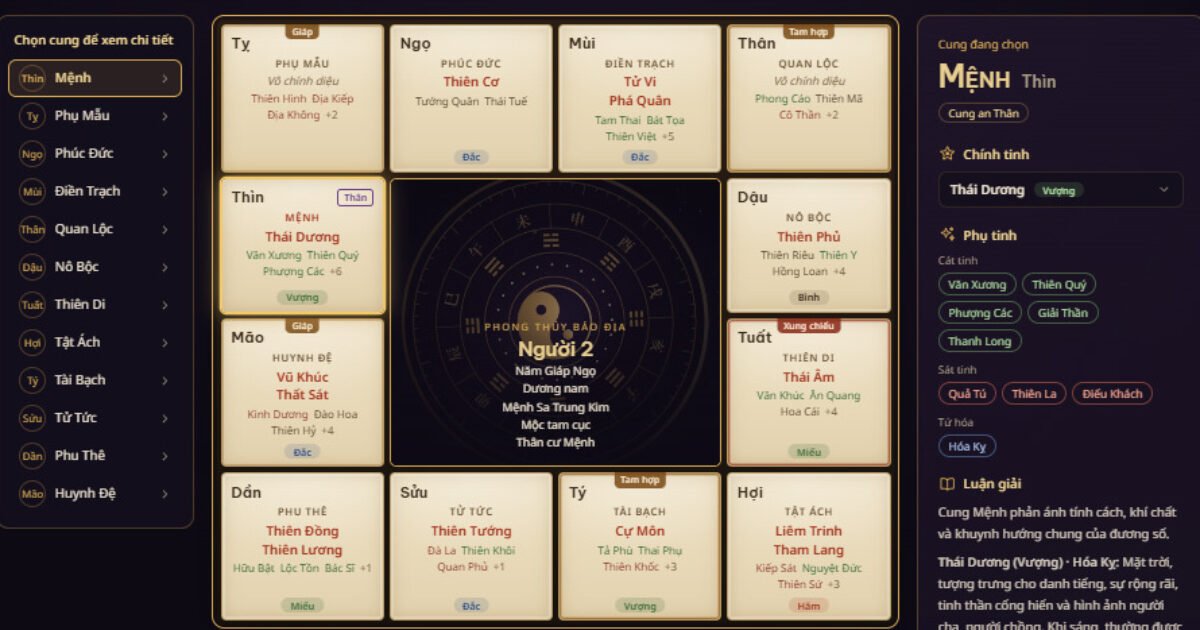
What is a Zi Wei chart, and why can a personal reading map be built from just the day, month, year and hour of birth plus gender? In Eastern metaphysics, the Zi Wei chart is used to study the relationship between the moment a person is born and a system of palaces, stars and traditional calendar elements.
Through the chart, a reader can explore aspects such as character, family, career, finances and the stages of one’s fortune according to Zi Wei Dou Shu. However, to understand the value of a chart correctly, you first need to know its structure, how it is set up and the method of interpretation used.
1. What is a Zi Wei chart?
A Zi Wei chart is a diagram showing an individual’s structure of palaces and system of stars, set up from the day, month, year and hour of birth and gender according to the rules of Zi Wei Dou Shu.
In this system, birth information is converted into calendar data such as the lunar date, heavenly stems, earthly branches and five elements. From these, the chart maker determines the positions of the 12 palaces, the Life palace, the Body palace, the element bureau, the main stars, minor stars and related factors.
A Zi Wei chart can be understood as a reference map of the structure of destiny in the traditional view. Each palace and star position has its own meaning, and together they form the basis for reading the various aspects of life.
A chart is not a definite forecast of every event that will happen. Interpretation depends on the school, the star-placement rules and the methodology of the practitioner.
2. What are the components of a Zi Wei chart?
A traditional Zi Wei Dou Shu chart is usually laid out as 12 palaces surrounding a central information area. The palaces are arranged by the 12 earthly branches and contain information on stars, stem-branches, five elements and luck periods.
2.1. The heavenly board – the chart’s overview
The heavenly board is the area showing the base data used to set up and read the chart.
It usually includes:
- The day, month, year and hour of birth.
- The lunar date and corresponding stem-branches.
- The native five element.
- The Life palace and the Body palace.
- The element bureau and, depending on the layout, the Life Lord and Body Lord.
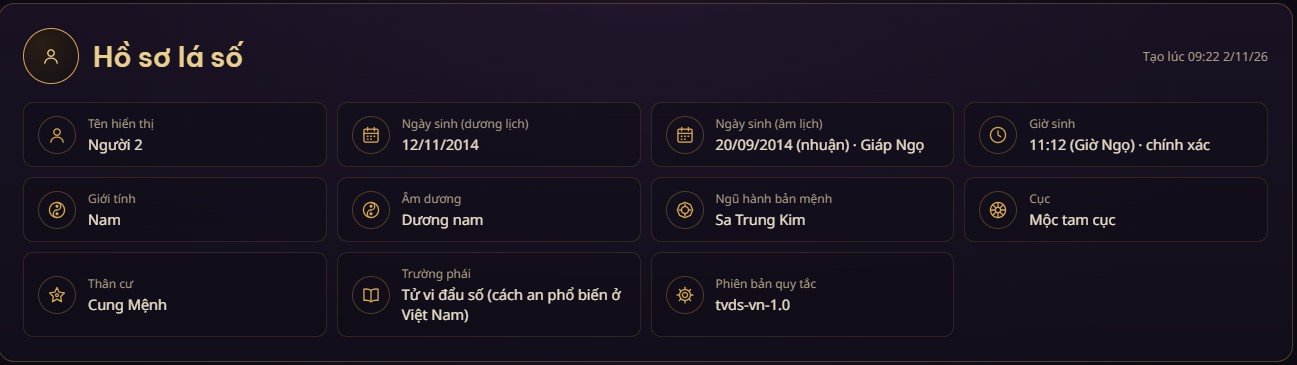
These data establish the chart’s foundation and are the basis for placing the palaces and stars according to the chosen school’s rules.
2.2. The earthly board – the system of 12 palaces
The earthly board is the system of 12 palaces representing different aspects of life. Each palace covers its own group of topics.
| Palace | Reference meaning |
| Element | Self, character and direction of development |
| Parents | Parents and relationships with family |
| Blessings | Blessings, lineage and inner life |
| Property | Home, residence and real estate |
| Career | Work, career and professional path |
| Servants | Friends, colleagues and social relationships |
| Travel | Outside activities, communication and travel |
| Health | Health and matters to watch |
| Wealth Palace | Finances, income and money management |
| Children | Children and the relationship with them |
| Spouse | Marriage and the spousal relationship |
| Siblings | Siblings and family relationships |
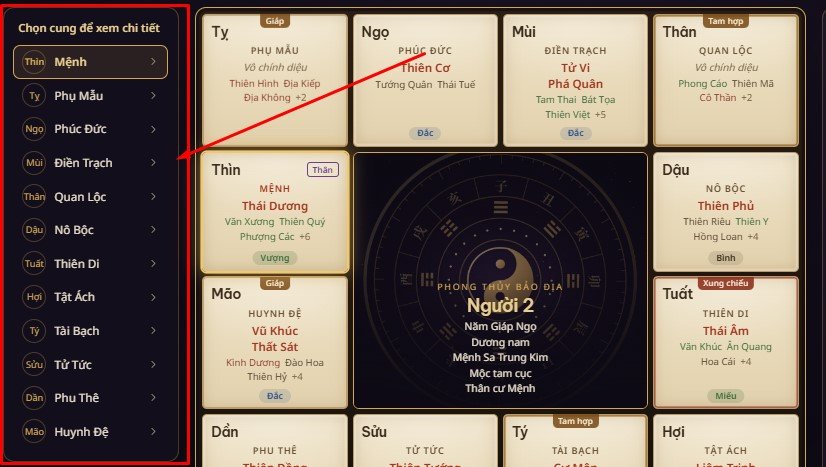
When reading a palace, one looks not only at its name but also at the stars present, the facing stars and its relationship with the related palaces.
2.3. Main stars and minor stars
The star system is a key component of Zi Wei Dou Shu.
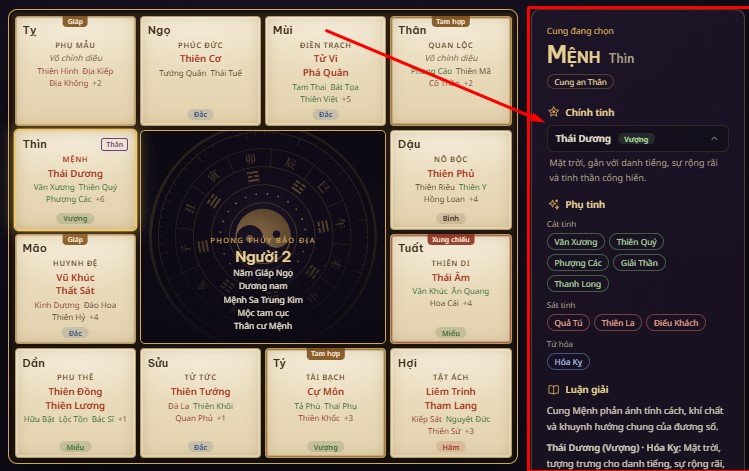
The 14 main stars are the principal group of stars used to read the structure of the palaces. Their positions on the chart create different characteristics when looking at each aspect of life.
Besides the main stars there is a system of minor stars, good stars, stars to watch and other supporting factors. Some star groups are usually considered together to assess a palace’s characteristics and the links between palaces.
The chart may also show the Four Transformations, Xun, Jie and star cycles, depending on the calculation school.
Don’t read a palace by looking at a single star. A star’s meaning must be placed within the whole structure of the chart.
3. What does a Zi Wei chart offer for self-understanding?
In Zi Wei Dou Shu, the chart is used to study many aspects of life. Each group of palaces offers a different perspective, giving readers more reference points for looking at themselves.
Exploring character and strengths: The Life palace, Body palace and the main stars are used to read personal traits, tendencies in action and ways of behaving.
Career orientation: The Career, Wealth and Travel palaces are usually considered when studying work, abilities, the environment for growth and financial tendencies.
Exploring relationships: The Spouse, Parents, Siblings, Children and Friends palaces provide data for reading aspects of family and social relationships.
Following the stages of fortune: Major luck periods and smaller periods are used to analyze each stage according to the method of the Zi Wei school.
From a modern perspective, the chart can be seen as a tool for self-reflection. Interpretations of strengths, limitations and behavioural tendencies can raise questions that help each person assess themselves and adjust their life plans.
This content belongs to a traditional metaphysical system, not a proven scientific method of prediction. Don’t use a chart as the sole basis for decisions about health, investment, legal or other important matters.
4. What information do you need to set up a Zi Wei chart?
To set up a chart, prepare your basic birth data. The accuracy of the input directly affects the calculated result.
| Information | Requirement | Purpose |
| Date of birth | Required | Determine the calendar data |
| Time of birth | Required by the form | Determine the birth hour and the positions of elements on the chart |
| Gender | Required by the school’s conventions | Calculate the direction of luck periods and some star cycles |
| Calendar | Must be chosen | Distinguish a Gregorian or lunar birth date |
| Name | Optional | Identifying information on the interface |
| Place of birth | Depending on the case | Helps standardize historical time zones |
Of these, the birth hour is especially important. If you only remember a rough time of birth without the exact hour and minute, note the uncertainty rather than choosing an arbitrary hour.
Gender in the form is used according to the calculation school’s conventions, not as an assessment of the person’s gender identity.
5. Why do the birth hour and place of birth matter?
The birth hour is used to determine the positions of many components of the chart, including the Life palace, the Body palace and the star placements. When the birth hour changes, the chart’s structure may change too.
In particular, if the birth time is close to the boundary between two double-hours, getting the hour wrong can lead to different results.
The place of birth also matters when historical time zones need to be handled. Not every period in history used the same time zone in a given place.
For example, the Zi Wei Chart tool at Treasure Land Feng Shui standardizes time using the IANA time-zone database. The system takes into account historical periods when a place used a different offset from today, such as daylight saving time and historical time-zone changes.
So if you were born in a place and period with historical time-zone changes, providing your place of birth gives the standardization process a firmer basis.
6. Popular charting schools
Not all charting tools use the same method. Differences in star-placement rules, handling of the Rat hour, calendars and interpretation can produce different results.
The Treasure Land Feng Shui tool currently offers three method options:
Zi Wei Dou Shu
This school focuses on the system of 12 palaces, the 14 main stars, minor stars and traditional elements.
Practitioners use the positions of stars in each palace, the relationships between palaces and the luck-period system to read the aspects of life.
Zi Wei with modern interpretation
This method uses the same star placement as Zi Wei Dou Shu but extends the interpretation in a modern direction.
The 14 main stars are read as psychological archetypes, combined with career orientation and risk management by major luck period. This approach aims to help readers relate traditional readings to practical issues.
Four Pillars and Ba Zi
The Four Pillars, also called Ba Zi, is a different system from Zi Wei Dou Shu.
This method is based on the four pillars of the birth year, month, day and hour, determined by solar terms. The components analyzed include the Day Master, the Ten Gods, the chart structure, the Useful God and the major luck periods.
So when setting up a chart or reading an interpretation, check which school is being used. Don’t treat Four Pillars and Zi Wei Dou Shu results as two presentations of the same system.
7. How to set up a Zi Wei chart online at Treasure Land Feng Shui
You can set up your own chart with the Zi Wei Chart tool – Treasure Land Feng Shui. The tool lets you enter your birth information, choose the calendar type and select a calculation school before generating the result.
The process has four steps:
Step 1: Enter your birth date and time
Fill in your birth day, month, year and hour. You can choose the Gregorian or lunar calendar depending on the data you have.
If you don’t remember your exact birth hour, the tool has options for an unknown birth hour or a known double-hour only. Note, however, that a missing birth hour may limit how complete the chart can be.
Step 2: Check the data and calendar type
Confirm your birth date, calendar type and the information entered. The system can detect non-existent dates, leap lunar months or missing fields.
If you were born at a time of historical time-zone changes, you can enter your place of birth to help standardize the time.
Step 3: Choose a calculation school
Choose Zi Wei Dou Shu, Zi Wei with modern interpretation, or Four Pillars and Ba Zi depending on what you want to explore.
Each school has its own system and calculation rules, so be clear about the method before setting up the chart.
Step 4: Create the chart and view the result
Once the information is complete, choose Create my chart now for the system to calculate and display the result.
You can use the generated data to explore the structure of palaces and stars and the readings for the chosen school.
8. Does the online Zi Wei chart tool keep your information private?
When using an online tool, your birth date and time are personal information you should care about.
According to the Treasure Land Feng Shui tool’s description, the chart is calculated right in your browser and your birth date and time are not sent to the server. A name is also optional, so you can create a chart without giving your real name.
The system also describes a mechanism for verifying results between the browser engine and the server, using the same rule version to cross-check thousands of charts and edge cases such as the Rat hour, midnight, the lunar new year boundary, leap months and time-zone changes.
Publishing the calculation method, the rule version and data warnings clearly helps users understand how the result is produced, rather than just receiving a diagram without knowing how it was calculated.
Conclusion
A Zi Wei chart is a diagram built from birth information according to the rules of a school of Eastern metaphysics. Its structure usually consists of 12 palaces, main stars, minor stars and factors related to stem-branches, the five elements and luck periods.
For reliable results within the chosen method, enter your birth date and time correctly, specify the calendar type, mind historical time zones and check the calculation school. If you want to explore a chart’s structure yourself, you can use the Zi Wei Chart tool at Treasure Land Feng Shui to create a chart and explore the corresponding readings.
Editorial information
 Written byTechnical & Visual Design TeamThe unit that designs visual diagrams and keeps the website secure.
 Reviewed byContent Review BoardThe unit that screens material and verifies its accuracy.
Last updated: 21/11/2026
References
- JAHH 2019 PDF
- Aslaksen, The Mathematics of the Chinese Calendar
- Ho Ngoc Duc, Leipzig University
- UNESCO, Twenty-Four Solar Terms
- Truong Anh Thuan, The Hiep Ky calendar under the Nguyen dynasty
- Smith, Chinese Almanacs (book review)
- Smith, Fortune-tellers and Philosophers (book review)
- Ziwei doushu, Wikipedia
- Bruun, An Introduction to Feng Shui
- Feuchtwang, LSE eprints
- Bourassa & Peng 1999
- Bond, Feng Shui and Condominium Prices
Content follows our editorial standards of Treasure Land Feng Shui. Results are for reference, based on traditional beliefs.
Related articles
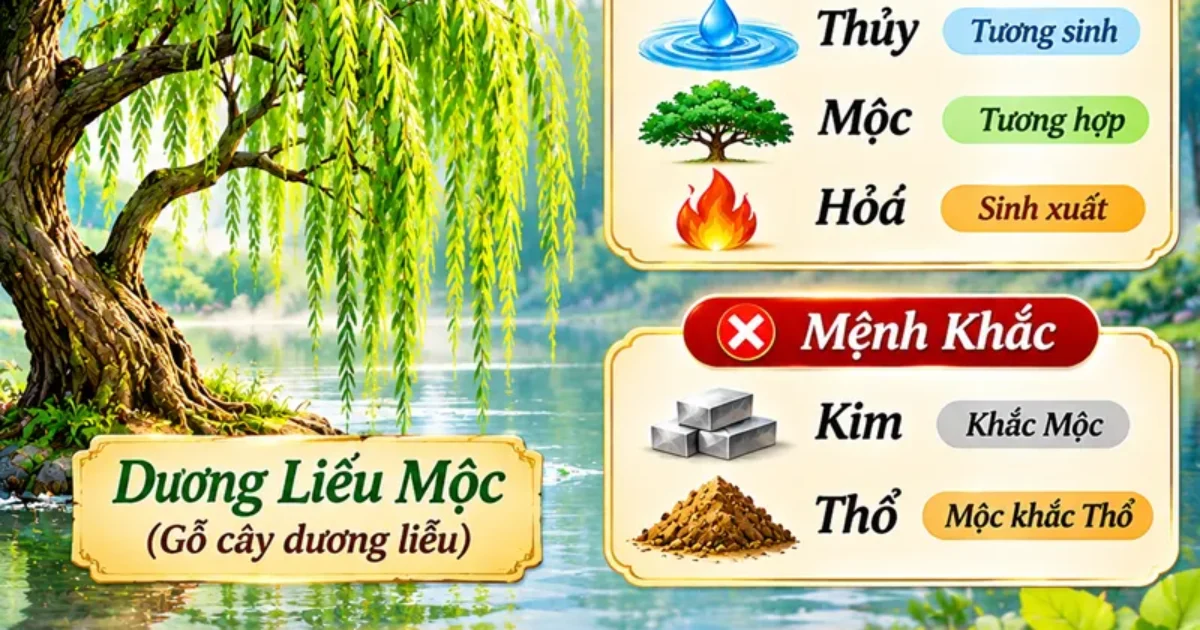
Which Elements Suit Willow Wood? Compatible and Clashing Elements and Lucky Colors
In the sixty-year Jiazi cycle, Willow Wood is a Na Yin element with a distinctive image. Not an ancient hardwood tree or a vast forest, Willow Wood represents the willow,…
19/11/2026 · 15 min read
Does Wood Control Earth? Causes and Remedies in the Five Elements
In five-element feng shui, Wood and Earth have a controlling relationship. Wood represents trees, growth and development, while Earth represents land, stability and nourishment. This difference leaves many people unsure…
18/11/2026 · 10 min read
What Is the Su Xi Hour? Meaning, Calculation and What to Do
In the tradition of choosing days and hours, Su Xi (Swift Joy) is seen as a time that brings joy, luck and favorable turns in one’s affairs. People in the…
16/11/2026 · 9 min read