Chinese Astrology
Do Two People Born on the Same Day and Hour Have the Same Chart? A Detailed Answer

Do two people born on the same day and hour have the same chart? Under the rules of Zi Wei Dou Shu, if two people share the same birth day, month, year and hour and meet the same chart conventions, their charts can match in the structure of the 12 palaces and the positions of the stars. However, that does not mean the two will live identical lives, make the same choices or have the same outcomes.
This is a question many people ask when exploring Zi Wei, especially for twins or two unrelated people born at the same time. To understand it better, distinguish the sameness of the chart by calculation from the differences that form in real life.
Do two people born on the same day and hour have the same Zi Wei chart?
The answer is that they can have the same chart in structure if the input data and charting rules are the same.
In Zi Wei Dou Shu, a chart is set up from the birth day, month, year and hour together with related conventions. From these data, the system determines the positions of the 12 palaces and places the main stars, minor stars and other factors according to the method used.
So if two people have fully matching birth data and their charts are set up with the same system, the results can match in many components, including:
- The positions of the 12 palaces on the chart.
- The main and minor stars present or facing.
- The structure of links between palaces.
- Luck-period information calculated by the same rules.
However, distinguish between the same input data and the same whole life circumstances. A structurally identical chart does not mean two people share the same family, education, social environment or personal experiences.
Why do two people born on the same day and hour have the same chart?
1. The charting method is based on birth data
Zi Wei Dou Shu uses the birth day, month, year and hour to determine how the palaces and stars are placed under a system of traditional rules. When the input data are the same and the same method is applied, the resulting charts can match.
This is why two people born at the same moment usually have technically identical charts.
Even so, check the calendar conventions of the tool you use. Factors such as lunar date conversion, how the birth hour is determined or the star-placement rules can affect the result if sources use different methods.
2. The case of twins
Twins are the most obvious case when discussing people with the same chart. Two people born a few minutes apart may fall in the same double-hour and have the same birth date under charting conventions.
If these data do not change how palaces and stars are placed, the two people’s natal charts can match.

However, if the birth time is close to the boundary of an hour or a day, verify the exact birth time and the rules being used. Don’t assume every pair of twins has an identical chart in every charting system.
Why can lives differ even with the same chart?
Identical Zi Wei charts do not mean the events of life must unfold the same way. Many real-world factors create differences between two people.
1. Family and living environment
The family is one of the first environments that shapes each person’s development. Two people with the same birth date and hour who grow up in different families may have very different access to education, finances, care and opportunities.
For example, one person is encouraged to study, take part in extracurricular activities and develop their talents; the other may have to start working early to support the family. These experiences create differences in skills, social relationships and career choices.
2. Personal decisions and effort
Even with a similar starting point, each person can still make different decisions.
One chooses to continue studying, the other starts working early. One perseveres toward a goal, while the other changes direction after a difficult experience.
These choices directly affect study, work and relationships. So having the same chart should not be used to conclude that two people will certainly achieve the same things or face the same obstacles.
3. Opportunities and social circumstances
When opportunities arrive, where one lives, one’s network and economic conditions can significantly affect one’s path.
For example, two people with the same abilities and career goals but living in different places may have access to different industries, training programmes or job markets.
These are real factors to consider when explaining why two people’s lives can differ even though they share the same birth date and hour.
4. Experiences and how one copes with events
Events such as changing jobs, moving house, financial difficulty or starting a family do not necessarily happen the same way for two people.
Even when facing a similar situation, each person may react and solve problems differently. So it cannot be inferred that two people with the same chart will go through identical events in content, timing or degree.
In traditional Zi Wei, some schools use luck-period factors to interpret favourable or challenging periods. However, using a chart to predict personal events precisely has not been confirmed by science.
Do twins have identical Zi Wei charts?
Twins can have the same chart if their birth date and hour are determined by the same convention and their births fall within the same time slot used for charting.
To check, note a few points:
- Birth date: Determine the correct day, month and year in the calendar system the method requires.
- Birth hour: Check the exact time of birth, especially when two people were born a few minutes apart near the boundary of an hour.
- Gender and charting rules: Enter the data the tool asks for correctly, as some star-placement or luck-period methods also use this information.
- Charting method: Both results must be produced with the same system of rules to be compared accurately.
If the charts are the same, it only shows that the factors calculated from the input data can match. It should not be taken as evidence that the two people’s personalities, health, careers or whole lives will be the same.
Are a Zi Wei chart and a Four Pillars chart the same?
Zi Wei Dou Shu and the Four Pillars are two different traditional systems, although both use birth-time data.
| Criterion | Zi Wei Dou Shu | Four Pillars |
| Basic structure | A chart of 12 palaces and a system of stars | Four pillars: year, month, day and hour |
| Focus | Functional palaces, main stars, minor stars and their relationships | Heavenly stems, earthly branches and five-element reading |
| Input data | Birth date and hour plus charting conventions | Birth date and hour plus the system’s calendar rules |
| Possibility of a match | Can match when the data and star placement are the same | Can match when the data and pillar construction are the same |
So when asking whether two people born on the same day and hour have the same chart, be clear whether you mean Zi Wei Dou Shu or the Four Pillars. Don’t use the result of one system in place of the other.
Can identical charts be used to predict two lives?
Identical charts can be used to compare interpretations within the same school of Zi Wei. However, the result should not be seen as sufficient grounds to conclude that two people will have the same career, marriage, wealth or lifespan.
If you want to explore the differences between two people, you can consider at the same time:
- Charting information: Confirm the birth date and hour and the conventions used.
- Starting circumstances: Family, place of residence, educational conditions and opportunities.
- Personal choices: Goals, skills, habits and ways of coping with difficulty.
- Real experiences: Events that have happened and how each person has adapted.
This approach helps distinguish what is interpreted through Zi Wei from the factors observable in life. Important decisions about health, finances, career or family should be based on real information and proper assessment, not on a chart alone.
Conclusion
Do two people born on the same day and hour have the same chart? Under the rules of Zi Wei Dou Shu, they can have structurally identical charts if the birth date, hour and charting conventions all match. However, identical charts do not mean the two people will have identical lives.
Family, environment, opportunities, decisions and personal experiences all help create different paths. So treat the chart as a reference system within traditional Zi Wei culture, not a tool that can determine anyone’s whole destiny with certainty.
Editorial information
 Written byTechnical & Visual Design TeamThe unit that designs visual diagrams and keeps the website secure.
 Reviewed byContent Review BoardThe unit that screens material and verifies its accuracy.
Last updated: 21/11/2026
References
- The calendars of Southeast Asia. 3: Vietnam (NASA ADS)
- JAHH 2019 PDF
- Aslaksen, The Mathematics of the Chinese Calendar
- Ho Ngoc Duc, Leipzig University
- Le Thanh Lan, VieChiCa
- UNESCO, Twenty-Four Solar Terms
- Truong Anh Thuan, The Hiep Ky calendar under the Nguyen dynasty
- Smith, Chinese Almanacs (book review)
- Smith, Fortune-tellers and Philosophers (book review)
- Ziwei doushu, Wikipedia
- Bruun, An Introduction to Feng Shui
- Feuchtwang, LSE eprints
- Bourassa & Peng 1999
- Bond, Feng Shui and Condominium Prices
Content follows our editorial standards of Bao Dia Feng Shui. Results are for reference, based on traditional beliefs.
Related articles
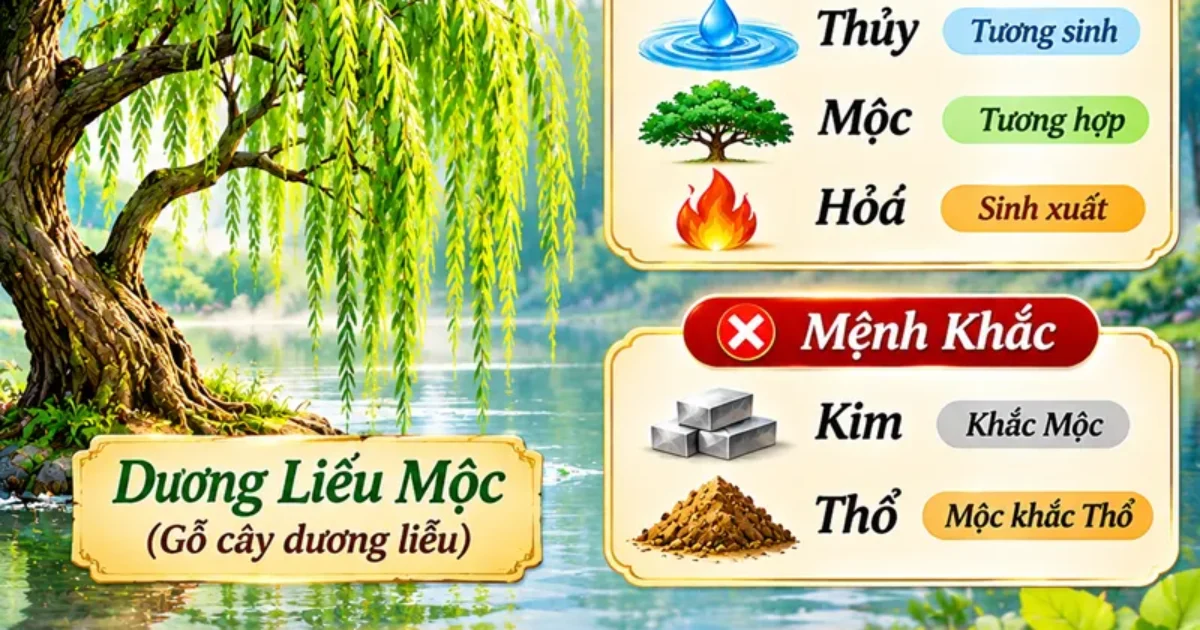
Which Elements Suit Willow Wood? Compatible and Clashing Elements and Lucky Colours
In the sixty-year Jiazi cycle, Willow Wood is a Na Yin element with a distinctive image. Not an ancient hardwood tree or a vast forest, Willow Wood represents the willow,…
19/11/2026 · 15 min read
Does Wood Control Earth? Causes and Remedies in the Five Elements
In five-element feng shui, Wood and Earth have a controlling relationship. Wood represents trees, growth and development, while Earth represents land, stability and nourishment. This difference leaves many people unsure…
18/11/2026 · 10 min read
What Is the Su Xi Hour? Meaning, Calculation and What to Do
In the tradition of choosing days and hours, Su Xi (Swift Joy) is seen as a time that brings joy, luck and favourable turns in one’s affairs. People in the…
16/11/2026 · 9 min read