
Chinese Astrology
The Blessing Stars of Zi Wei: List, Meanings and Characteristics
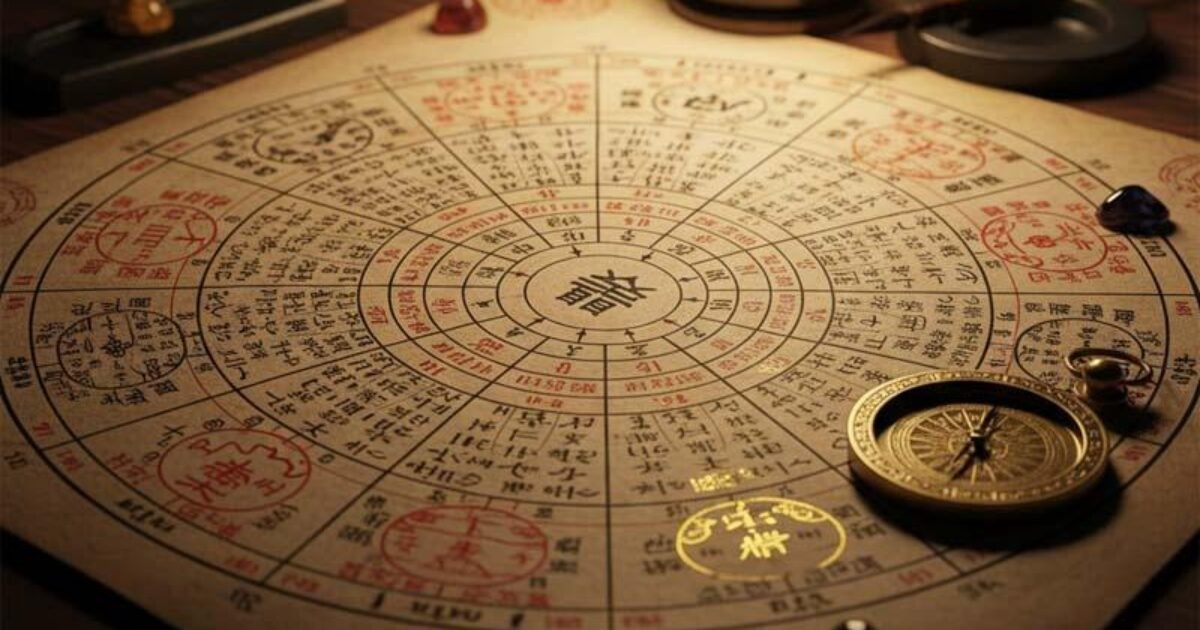
In a Zi Wei chart, not every auspicious star is about money or power. Some stars lean toward protection, kindness, the ability to overcome adversity and a peaceful life. That is why the Blessing stars of Zi Wei always hold a notable place in reading a destiny.
People with many Blessing stars are popularly associated with good karma, benefactors and the ability to turn misfortune into good fortune. However, the value of each star also depends on the palace it sits in, the stars it travels with and the layout of the whole chart. Understanding the true nature of the Blessing stars helps you avoid the idea that having a good star automatically guarantees wealth and status.
What are the Blessing stars in Zi Wei?
The Blessing stars are a group of auspicious stars in Zi Wei Dou Shu that symbolise good fortune, kindness, luck, longevity and the ability to soften adverse events.
The word “blessing” does not simply mean wealth. In the traditional sense, blessing also means health, a harmonious family, peace of mind, finding someone to help in hard times and knowing how to keep the good things you already have.
The Blessing stars are therefore often seen as supporting factors that help temper the adverse effects of malefic stars. Some lean toward morality and ancestral merit; others are about rescue, wisdom or joy in everyday life.
Note that the Blessing stars are not a fully agreed list across schools. Some stars are classed as Blessing stars while also belonging to the Relief, Noble or Literary groups. Hua Ke, for example, signifies learning and reputation but is also read as able to dispel hardship.
Which stars are the Blessing stars in Zi Wei?
In the Zi Wei system, the stars of a benevolent nature each have their own characteristics. Below are the main and minor stars most often mentioned when analysing the blessings of a chart.

Tian Tong – the Blessing star of ease and kindness
Tian Tong is one of the 14 main stars, regarded in many Zi Wei texts as the archetypal star of blessing.
Tian Tong’s hallmark is gentleness, softness and adaptability. People with this star in a favourable position are usually read as approachable, not overly competitive, fond of a peaceful life and valuing emotional contentment.
In traditional belief, Tian Tong also has a relieving quality, meaning it can ease adverse events when difficulties arise.
Even so, its love of ease has a downside. Without stars that drive ambition, Tian Tong can show up as passivity, reluctance to compete or a tendency to rely on others.
So Tian Tong is not simply a star that brings an easy life. To assess its blessings, you also need to consider its brightness (Temple, Prosperous or Fallen), the stars that join or face it and the palace it occupies.
En Guang and Tian Gui – the pair symbolising benefactors and grace
En Guang and Tian Gui are often mentioned together because both signify help, gratitude and good connections.
En Guang leans toward recognition of merit, kindness received and blessings that come from useful deeds. It also suggests a person who is considerate and treats others with loyalty.
Tian Gui, by contrast, emphasises benefactors, support and the chance of receiving help when facing obstacles.
When both stars appear in favourable positions on the chart, Zi Wei readers usually see it as a good sign for social relationships, trust and the ability to receive help.
A benefactor, however, need not be a powerful figure. In a symbolic reading, it may be a teacher, a colleague, a relative or someone who gives the right advice at the right time.
Tian Guan and Tian Fu (Heavenly Blessing) – blessings tied to goodness
Among the stars of virtue and blessing, Tian Guan and Tian Fu (Heavenly Blessing) are highly valued for their relieving and benevolent qualities.
Tian Guan is often associated with integrity, moral principle and deeds that benefit others. It is an image of protection earned through character and conduct.
Tian Fu (Heavenly Blessing) expresses grace, help and the chance of meeting favourable conditions when in difficulty.
When this pair meets other auspicious stars, the traditional reading leans toward generosity, compassion, tolerance and good connections.
Notably, Tian Guan and Tian Fu are not only considered in the Life palace. Their presence in the Fortune, Parents or Travel palace can also be used to analyse the family environment and the relationships that support the person.
Tian Jie, Di Jie (Earthly Relief) and Jie Shen – the group of relief stars
Not every good star symbolises bringing success. Tian Jie, Di Jie (Earthly Relief) and Jie Shen stand out more for their ability to soften adverse situations in Zi Wei belief.
Tian Jie symbolises rescue and the ability to find a way out of adversity.
Di Jie (Earthly Relief) is usually read as removing obstacles, easing trouble and making work less difficult.
Jie Shen is associated with dispelling, turning a situation around and getting past distressing events.
When these stars meet malefic stars, readers usually weigh the possibility of a reduced adverse effect rather than looking only at the malefic nature of each star on its own.
However, the phrase “dispelling calamity” is symbolic terminology in Zi Wei; it does not mean the ability to prevent illness, accidents or legal risks in real life.
Hua Ke – the star of learning with a relieving blessing
Hua Ke is well known for signifying intelligence, academic success, learning and reputation.
In many Zi Wei readings, Hua Ke is also highly valued for its ability to dispel hardship. This is what makes Hua Ke both a Literary star and a Blessing star.
When it sits in or faces important palaces, Hua Ke is often associated with solving problems through knowledge, reason and caution.
For instance, in the Career palace, Hua Ke may be read as favourable for specialist work, research, teaching or fields that require credibility.
In the Life palace, this star is often linked with someone who values knowledge, honour and principled conduct.
What sets Hua Ke apart is that its blessing is less about enjoyment and more about understanding and the ability to resolve difficulties.
Tian Xi – the star of joy and happy events
Tian Xi belongs to the group of stars that signify joy, good news and events worth celebrating.
In traditional Zi Wei, this star is often mentioned when reading about marriage, love, family reunions or positive turning points in life.
When it meets Hong Luan and suitable auspicious stars, Tian Xi is often considered in matters of romance and happy tidings.
Even so, Tian Xi does not always mean an imminent wedding or a birth. Its specific meaning depends on the palace, the luck period and the related star combinations.
More broadly, Tian Xi represents an important side of blessing: joy, harmony and a sense of contentment in life.
Tian Shou – the symbol of endurance and serenity
As its name suggests, Tian Shou is often associated with longevity, stability and the ability to sustain a long life.
In terms of character, this star also suggests calm, patience and a less extreme attitude to life.
When it appears with other benevolent stars, Tian Shou is seen as reinforcing the chart’s sense of peace and lasting stability.
However, the presence of Tian Shou cannot be used to predict a person’s lifespan accurately. Actual health and longevity are influenced by many biological, environmental and behavioural factors and by access to medical care.
The Four Virtues – Heavenly Virtue, Monthly Virtue, Fu De and Long De
In Zi Wei, the Four Virtues are a combination of four stars notable for signifying morality, compassion and blessing.
| Star | Meaning in traditional Zi Wei |
| Heavenly Virtue | Virtue, compassion, protection and goodness |
| Monthly Virtue | Tolerance, reconciliation, easing conflict |
| Blessings | A foundation of merit, good connections and security |
| Long De | Generosity, kindness, harmony in relationships |
The Four Virtues are often seen as a symbol of nurturing blessings through virtue. Rather than stressing power or wealth, this group of stars evokes decency, a responsible way of living and how one treats others.
In folk readings, the Four Virtues together with other good stars can help strengthen the auspicious meaning of the palace in question.
One distinction to note is that the Fu De star and the Fortune palace are not the same thing. The Fu De star is a minor star, whereas the Fortune palace is one of the 12 palaces of the chart.
Other main stars with a benevolent nature
Besides Tian Tong, some main stars such as Tian Liang, Tian Fu and Tian Ji are also mentioned when analysing blessings.
Of these, Tian Liang is often associated with integrity, protection, blessings and longevity, and the ability to dispel hardship. Tian Fu symbolises stability, accumulation and a material foundation. Tian Ji leans toward intelligence, flexibility and finding ways through difficulty.
These stars do not share exactly the same nature, but all of them can contribute positive meanings when well placed.
What does it mean when Blessing stars sit in the Life palace or the Fortune palace?
The same star appearing in different palaces carries a different nuance of interpretation. That is why the Blessing stars should not be considered in isolation.
Blessing stars in the Life palace
The Life palace is usually used to analyse the person’s character, temperament and most notable traits.
When Blessing stars sit in or face the Life palace, readers usually pay attention to kindness, a mild way of life, the ability to build good relationships and how the person responds to adversity.
For example, Tian Tong in the Life palace may show a gentle disposition and a love of comfort, while Hua Ke is often linked with a love of learning and a sense of protecting one’s honour.
But if many killing stars appear at the same time, the good meanings must also be weighed within the chart as a whole.
Blessing stars in the Fortune palace
The Fortune palace is seen as reflecting inner life, family background, one’s idea of happiness and one’s share of blessings in the traditional sense.
If many Blessing stars gather in this palace, Zi Wei readers usually read it as a sound inner foundation, valuing family bonds and finding security in life more easily.
In particular, the Four Virtues, En Guang and Tian Gui, or Tian Guan and Tian Fu (Heavenly Blessing) are considered noteworthy when analysing the benevolent meaning of this palace.
However, a beautiful Fortune palace does not mean every aspect of life will go smoothly. It must be compared with the Life, Wealth, Career and other related palaces.
What happens when Blessing stars meet malefic stars?
One of the key principles of Zi Wei reading is never to draw conclusions from a single star.
Malefic stars are usually associated with challenges, upheaval or obstacles. Blessing stars, on the other hand, can provide a tempering, supporting or softening effect in the traditional reading.
For example, a palace with killing stars that also meets Hua Ke, Tian Jie or Tian Fu (Heavenly Blessing) may be read as still having rescuing elements.
Even so, not all Blessing stars have the same power to relieve. Some lean toward kindness, some are about benefactors, and some are valued mainly for softening misfortune.
The degree of influence also depends on the star’s position, its brightness, the combinations in the same palace, the trines, the opposite palace and the luck period being considered.
“Meeting misfortune but turning it to good” should therefore be understood as a principle of interpretation in Zi Wei, not a guarantee that a person with Blessing stars will avoid every setback.
How to recognise the Blessing stars on a Zi Wei chart
When studying a chart, the point is not just to count the good stars but to identify which areas of life they affect.
You can start by looking at the stars in the Life palace and the Fortune palace, then consider the palaces in the three-sides-and-four-directions group.
If you find Tian Tong, Tian Liang, En Guang, Tian Gui or the Four Virtues, learn the nature of each star before judging the whole.
A chart with many Blessing stars that also meets strong killing stars may be read differently from a chart with fewer Blessing stars but a stable arrangement of main stars.
It is also important to distinguish three groups of stars that are easily confused:
| Star group | Key characteristics |
| Blessing stars | About merit, peace, kindness and protection |
| Noble stars | Lean toward prestige, benefactors and support |
| Relief stars | Emphasise softening adversity and dispelling it in Zi Wei belief |
One star can belong to several groups at once, because the classification is based on characteristics rather than absolute boundaries.
Does having many Blessing stars guarantee a happy life?
This is a common misunderstanding among people new to Zi Wei.
In the traditional system, the presence of many Blessing stars is usually seen as a positive sign, but it is not enough to conclude that a person will be rich, healthy or free from difficulty.
Blessing in Zi Wei covers more than wealth. Some people are read as blessed in family, others in inner life, in help from those around them or in the ability to adapt to change.
A chart with Tian Tong, Tian Fu (Heavenly Blessing) or Hua Ke cannot replace real-life factors such as environment, education, health, economic conditions and personal choices.
So learning about the Blessing stars is best seen as exploring a traditional cultural symbol system, rather than using the stars to declare the future with certainty.
Blessing stars and the idea of accumulating virtue in Eastern culture
A notable feature of how the Blessing stars are interpreted is their link to the idea of living virtuously.
East Asian cultures have long valued keeping one’s word, treating others sincerely, helping those in difficulty and building a harmonious family. These same values often appear in readings of Heavenly Virtue, Monthly Virtue, En Guang or Tian Fu (Heavenly Blessing).
From a cultural point of view, these stars can be seen as images reminding people to care about their character, their relationships and their own responsibilities.
Instead of just hoping to meet a benefactor, each of us can actively build trustworthy relationships. Instead of waiting for a star to dispel trouble, careful preparation and prudent conduct reduce many real-world risks.
This approach also brings ideas of blessing and merit closer to life today.
Editorial information
 Written byTechnical & Visual Design TeamThe unit that designs visual diagrams and keeps the website secure.
 Reviewed byContent Review BoardThe unit that screens material and verifies its accuracy.
Last updated: 21/11/2026
References
- The calendars of Southeast Asia. 3: Vietnam (NASA ADS)
- JAHH 2019 PDF
- Aslaksen, The Mathematics of the Chinese Calendar
- Ho Ngoc Duc, Leipzig University
- Le Thanh Lan, VieChiCa
- UNESCO, Twenty-Four Solar Terms
- Truong Anh Thuan, The Hiep Ky calendar under the Nguyen dynasty
- Smith, Chinese Almanacs (book review)
- Smith, Fortune-tellers and Philosophers (book review)
- Ziwei doushu, Wikipedia
- Bruun, An Introduction to Feng Shui
- Feuchtwang, LSE eprints
- Bourassa & Peng 1999
- Bond, Feng Shui and Condominium Prices
Content follows our editorial standards of Bao Dia Feng Shui. Results are for reference, based on traditional beliefs.
Related articles
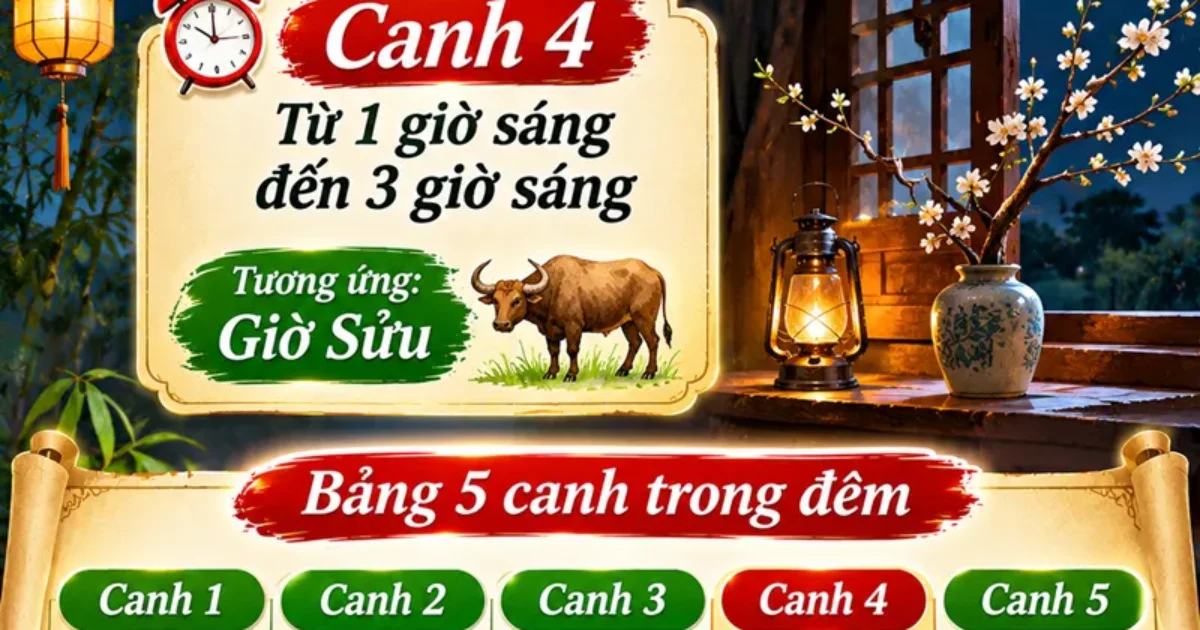
What Time Is the Fourth Watch? How People of Old Divided the Night into Five Watches
In traditional Vietnamese culture, expressions such as “the drum of the third watch”, “awake until the fourth watch” or “the cock crows at the fifth watch” often appear in literature,…
20/11/2026 · 8 min read
Which Elements Suit Willow Wood? Compatible and Clashing Elements and Lucky Colours
In the sixty-year Jiazi cycle, Willow Wood is a Na Yin element with a distinctive image. Not an ancient hardwood tree or a vast forest, Willow Wood represents the willow,…
19/11/2026 · 15 min read
Does Wood Control Earth? Causes and Remedies in the Five Elements
In five-element feng shui, Wood and Earth have a controlling relationship. Wood represents trees, growth and development, while Earth represents land, stability and nourishment. This difference leaves many people unsure…
18/11/2026 · 10 min read