
Culture
What Is the Agricultural Calendar? Origins, Calculation and Role in Daily Life
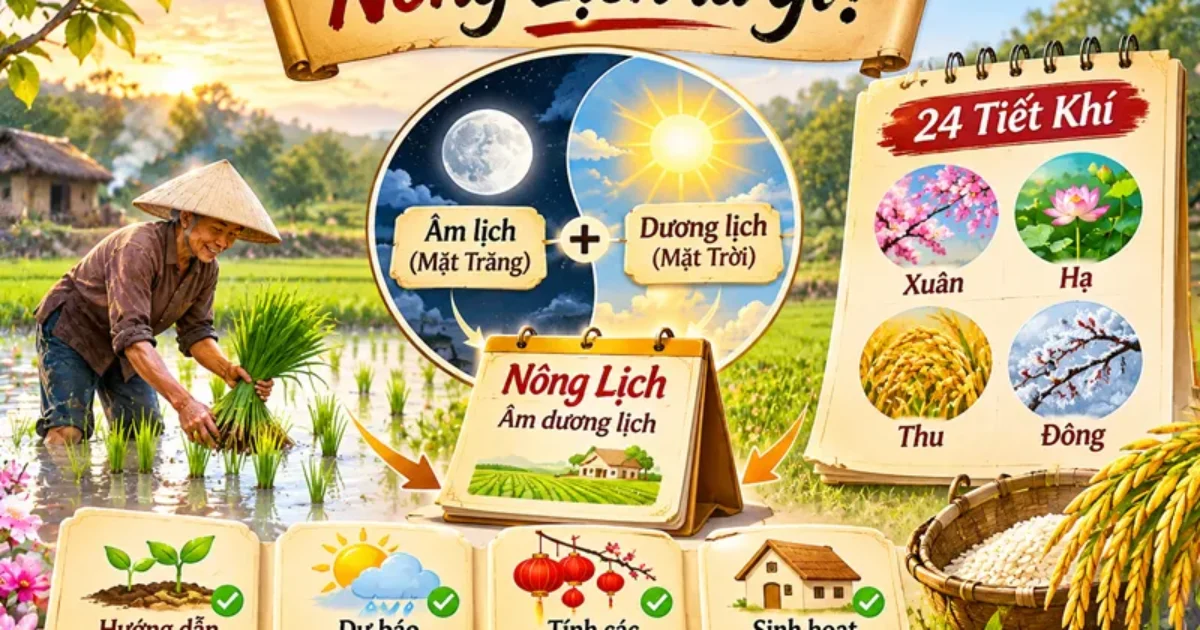
Long ago, before modern weather forecasting, people in East Asia observed the Moon, the Sun and the changing seasons to decide when to sow and harvest. Over many generations, this experience was combined with astronomical knowledge to form a calendar system serving production and daily life. One of its typical forms is the agricultural calendar.
So what is the agricultural calendar, does it differ from the lunar calendar, and why do the 24 solar terms play such an important role in it? To understand it, you need to look at the principle of combining the Moon’s cycle with the solar year, how leap months are determined and how the agricultural calendar is used in traditional farming culture.
What is the agricultural calendar?
The agricultural calendar is a traditional lunisolar calendar that combines the cycle of the Moon with the solar year to determine days, months, seasons and time markers for daily life, especially farming.
The name “agricultural calendar” comes from the close link between the calendar and cultivation. In societies whose economy rested on agriculture, getting the seasons right was vital for crop yields and food reserves.
Unlike a purely lunar calendar based only on the Moon’s cycle, the agricultural calendar also uses astronomical elements related to the Sun. The system of 24 solar terms identifies the changes of season and keeps the lunar months in step with the climatic year.
The agricultural calendar is used in the traditional culture of many East Asian countries, especially China and Vietnam. Japan and Korea also used similar lunisolar calendars historically.
Today, the calendar commonly called the “lunar calendar” in East Asia is in fact a lunisolar calendar, with months calculated from the Moon and adjustment rules based on the Sun.
The origin of the agricultural calendar in East Asian culture
The agricultural calendar arose from the need of ancient farming communities to organise production.

When people began growing crops and raising animals by season, telling time was no longer just for daily life. Farmers needed to know when the weather would warm up, when the rainy season would begin and when it was best to sow.
Through observation, people of old noticed that the waxing and waning of the Moon could be used to define months, while the changing apparent position of the Sun was tied to the turning of the seasons.
However, using only 12 lunar months, the months gradually drift away from the seasons. To solve this, ancient calendar makers developed rules for adding leap months and determining solar terms.
The Chinese calendar system went through many stages of revision and then influenced how other countries in the region calculated their calendars.
In Vietnam and elsewhere in the region, the lunisolar calendar became an important part of traditional life, serving not only farming but also the Lunar New Year, festivals, worship customs and community activities.
Is the agricultural calendar lunar or solar in nature?
The defining feature of the agricultural calendar is that it combines two different astronomical cycles.
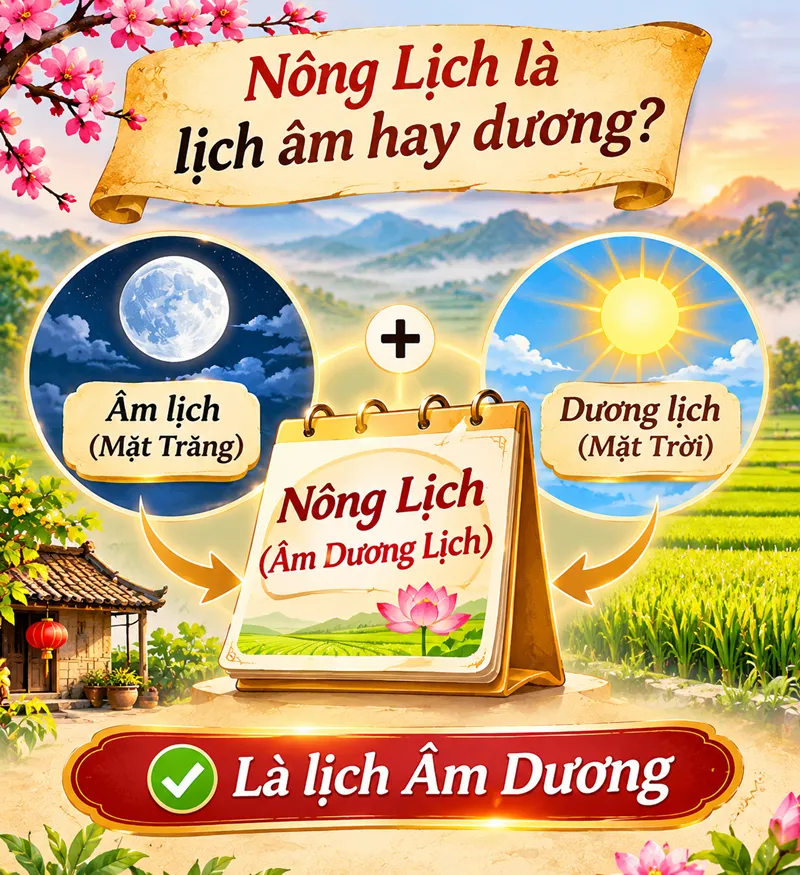
Months in the agricultural calendar follow the lunar cycle, while the year and the division of seasons are adjusted to the Earth’s movement around the Sun, expressed through the solar terms.
So calling the agricultural calendar purely lunar would not fully reflect how the system works.
The lunar element based on the Moon
A cycle from one new moon to the next lasts on average about 29.53 days.
So months in the agricultural calendar usually have 29 or 30 days.
A 29-day month is usually called a short month, and a 30-day month a full month.
Twelve lunar months total about 354 days, almost 11 days shorter than the solar year.
Without adjustment, the months would gradually shift against the seasons. After many years, months originally tied to spring could fall in winter or summer.
The solar element based on the Sun
A climatic year, or tropical year, lasts on average about 365.2422 days.
This period is tied to the cycle of seasons caused by the Earth’s orbit around the Sun and the tilt of its axis.
To mark points in the year, the traditional calendar uses 24 solar terms, corresponding to 24 positions of the Sun along its apparent path.
Thanks to the solar terms, the agricultural calendar can keep the lunar months in step with the seasons of the year.
Comparison of the elements forming the agricultural calendar
| Criterion | Lunar element | Solar element |
| Astronomical basis | The cycle of the Moon’s phases | The apparent position of the Sun |
| Related unit | Day, lunar month | Year and solar terms |
| Average cycle | 29.53 days per month | 365.2422 days per year |
| Role | Determines the start of the month and the lunar date | Determines the seasons and solar-term markers |
| Uses | Calculating lunar festivals | Following farming seasons and the change of seasons |
The combination of these two elements is the basis on which the agricultural calendar operates as a lunisolar calendar.
Why does the agricultural calendar have leap months?
Leap months are a key element that keeps the agricultural calendar in step with the seasons of the year.
A year of 12 lunar months has about 354 days, while the solar year is about 11 days longer.
If years of 12 months were used continuously without adjustment, the gap would accumulate to more than a month after three years.
To limit this drift, the lunisolar calendar adds a leap month in certain years.
A year with a leap month has 13 lunar months instead of the usual 12.
However, a leap month does not appear exactly every three years. The leap is determined by astronomical rules relating to new moons and principal solar terms.
In the lunisolar calendar, the lunar month containing the Winter Solstice is defined as the 11th month. When the span between two consecutive 11th months contains 13 lunar months, the leap month is determined from the months that contain no principal solar term, according to the calendar’s rules.
One distinction to note is that a lunar leap month is not the same as a leap day in the Gregorian calendar. The Gregorian calendar adds 29 February in a leap year, while the agricultural calendar may add a whole month.
What are the 24 solar terms in the agricultural calendar?
The 24 solar terms are a system of 24 astronomical markers dividing the solar year into consecutive periods, each 15 degrees of the Sun’s ecliptic longitude apart.
In the traditional calendar, the solar terms mark seasonal change, from when the weather starts to warm up through hot, cold or transitional periods.
The average interval between two consecutive solar terms is about 15 days, but they are not exactly equal.
The system consists of 12 sectional terms alternating with 12 principal terms. The principal terms play an important role in determining the months of the lunisolar calendar and the leap-month rule.
Table of the 24 solar terms in the agricultural calendar
| Season | Solar term | Usual Gregorian date |
| Spring | Start of Spring | 3–5/2 |
| Spring | Rain Water | 18–20/2 |
| Spring | Awakening of Insects | 5–7/3 |
| Spring | Spring Equinox | 20–21/3 |
| Spring | Thanh Minh | 4–5/4 |
| Spring | Grain Rain | 19–21/4 |
| Summer | Start of Summer | 5–6/5 |
| Summer | Grain Buds | 20–22/5 |
| Summer | Grain in Ear | 5–6/6 |
| Summer | Summer Solstice | 20–22/6 |
| Summer | Minor Heat | 6–8/7 |
| Summer | Major Heat | 22–23/7 |
| Autumn | Start of Autumn | 7–8/8 |
| Autumn | End of Heat | 22–24/8 |
| Autumn | White Dew | 7–8/9 |
| Autumn | Autumn Equinox | 22–23/9 |
| Autumn | Cold Dew | 8–9/10 |
| Autumn | Frost’s Descent | 23–24/10 |
| East | Start of Winter | 7–8/11 |
| East | Minor Snow | 22–23/11 |
| East | Major Snow | 6–8/12 |
| East | Winter Solstice | 21–22/12 |
| East | Minor Cold | 5–6/1 |
| East | Major Cold | 19–21/1 |
These markers are for reference. The start date of each solar term may vary by year and time zone.
For example, Start of Spring usually comes in early February, marking the beginning of spring in the traditional division of solar terms. The Summer Solstice, meanwhile, is tied to the longest day of the year in the Northern Hemisphere.
The Winter Solstice usually falls around 21 or 22 December, when the Northern Hemisphere has the shortest daylight of the year.
However, the names of the solar terms arose in the temperate climate of East Asia. So descriptions such as snowfall, frost or insects awakening do not necessarily reflect the weather accurately in every location.
The role of the agricultural calendar in farming
Before modern weather forecasting developed, the agricultural calendar was an important seasonal reference for many farming communities.
Through cyclical time markers, farmers could plan when to prepare the soil, sow seeds, tend crops and organise the harvest.
Deciding when to sow
In farming, choosing the right time to sow affects germination, growth and the development of crops.
Solar terms such as Start of Spring, Grain Rain and Grain in Ear are often mentioned in traditional farming wisdom.
For example, Grain in Ear relates to sowing grain crops and field work in the early summer period of the solar-term system.
However, actual planting seasons must be based on local climate, crop varieties and water resources.
Following seasonal change
The solar-term system helps identify where a given moment falls in the solar year.
Markers such as Start of Summer, Start of Autumn, Start of Winter or the Winter Solstice are used to describe the transitions between seasons in the calendar.
Farmers can combine these markers with their own weather observations to prepare for farming activities.
Even so, solar terms are not weather forecasts. A solar term cannot tell you exactly which day it will rain, a storm will hit or frost will appear.
Scheduling crop care and harvest
Besides sowing, the agricultural calendar also helps organise seasonal crop care.
Tasks such as tilling, fertilising, pest control and harvesting are usually scheduled according to the crop’s growth stage and the climate.
In modern farming, growers can still refer to traditional seasonal markers but should combine them with weather data, temperature, soil moisture and agricultural technical advice.
What role does the agricultural calendar play in wet-rice farming?
Wet-rice farming is heavily influenced by water supply, temperature, day length and the distribution of rainfall through the year.
Historically, understanding the pattern of seasonal change was important for the formation and development of rice-growing regions.
In northern Vietnam, traditional rice farming is usually organised into crops tied to the climate, such as the winter-spring crop and the main (tenth-month) crop.
In many central and southern areas, names such as winter-spring, summer-autumn or autumn-winter crops reflect production periods suited to local conditions.
However, crop calendars do not exactly match the 24 solar terms. Each region has its own climate, terrain, water resources and crop structure, so planting times differ too.
Table of agricultural calendar uses in farming
| Activity | Reference role of the agricultural calendar |
| Preparing the soil | Recognising the change of season to plan cultivation |
| Sowing | Referring to the season that suits the seasonal cycle |
| Irrigation | Combining the crop season with actual water conditions |
| Fertilising | Scheduling by the crop’s growth stage |
| Pest control | Tracking the crop season and conditions for pest outbreaks |
| Harvesting | Estimating when the crop reaches maturity |
| Storing produce | Preparing ahead for periods of adverse weather |
In modern farming, the agricultural calendar is valuable as a source of information on the seasonal cycle, but it cannot replace specialist crop calendars or local weather forecasts.
How does the agricultural calendar differ from the lunar and Gregorian calendars?
The agricultural, lunar and Gregorian calendars are all systems or names related to keeping time. However, their calculation bases and scope of use are not entirely the same.
In everyday language in East Asia, “agricultural calendar” and “lunar calendar” may be used almost interchangeably. Strictly speaking, though, the calendar used to determine the Lunar New Year and the lunar months is a lunisolar calendar.
Table distinguishing the agricultural calendar, a purely lunar calendar and the Gregorian calendar
| Criterion | Agricultural calendar | Purely lunar calendar | Gregorian calendar |
| Basis of calculation | The Moon and the Sun | The Moon | The Sun |
| Month length | 29 or 30 days | Usually 29 or 30 days | 28–31 days in the Gregorian calendar |
| Year length | Usually 12 months, some years 13 | 12 lunar months | 365 or 366 days |
| Leap month | Adds leap months | No leap months to keep the seasons | No added months, only leap days |
| Relationship with the seasons | Adjusted to match the seasons | Drifts through the seasons | Tied to the solar year |
| Example | Chinese and Vietnamese lunisolar calendars | Islamic calendar | Gregorian calendar |
The most important difference is that the agricultural calendar has an adjustment mechanism so the lunar months don’t drift freely through the seasons of the year.
It is this combination of lunar and solar cycles that lets the agricultural calendar serve both traditional date-keeping and the tracking of seasonal markers.
Which cultural activities use the agricultural calendar?
Beyond farming, the agricultural calendar has a deep and wide influence on East Asian cultural life.
Many traditional festivals are set by lunar dates, creating familiar cycles of family and community life.
Lunar New Year
The Lunar New Year falls on the 1st day of the 1st lunar month, marking the start of the new year in the lunisolar calendar.
Because lunar months follow the Moon’s cycle, the New Year is not fixed to a single Gregorian date.
It is an occasion tied to many customs, such as family reunions, ancestor worship, New Year greetings and remembering traditional values.
Mid-Autumn Festival
The Mid-Autumn Festival falls on the 15th day of the 8th lunar month, a time usually associated with the full moon.
This festival expresses the link between the lunar calendar and folk culture, and it also matters for family and community life.
Clear and Bright (Qingming)
Clear and Bright is one of the 24 solar terms, usually beginning around 4 or 5 April.
Notably, Clear and Bright is determined by the Sun’s position, not by a fixed day of a lunar month.
In East Asian culture, Clear and Bright is tied to the custom of tending ancestral graves and remembering ancestors.
The custom of choosing days and hours
The traditional calendar is also used to consult the timing of weddings, groundbreaking, grand openings or important ceremonies.
These activities usually combine lunar dates, stem-branches and folk ideas of good days and good hours.
However, choosing a day by custom is not a scientific method of predicting the success or failure of an undertaking.
How is the agricultural calendar related to the heavenly stems and earthly branches?
The heavenly stems and earthly branches are a traditional system of time notation consisting of 10 heavenly stems and 12 earthly branches, which combine into a cycle of 60 pairs called the sixty-year Jiazi cycle.
In East Asian calendars, stem-branches are used to name years, months, days and hours.
For example, 2024 is called Jia Chen, 2025 Yi Si and 2026 Bing Wu.
However, note that stem-branches are a cyclical naming system, while the agricultural calendar is a system for determining dates and seasons based on astronomical rules.
The two systems often appear together on a traditional calendar, but they are not the same concept.
A day can be written both as a lunar date and with its own stem-branch name. This lets the traditional calendar show several layers of time information on the same sheet.
Is the agricultural calendar still relevant to modern life?
Although the Gregorian calendar is widely used in administration, commerce and international communication, the agricultural calendar still plays an important role in East Asian culture.
In daily life, people use lunar dates to remember death anniversaries, celebrate festivals and keep family customs.
In agriculture, solar-term markers remain valuable for studying the seasonal cycle and traditional farming wisdom.
However, modern production is affected by many factors such as climate change, extreme weather, changing water supplies and the development of new crop varieties.
So the wisdom tied to the agricultural calendar should be used flexibly rather than applied mechanically.
For example, a solar term signalling summer in the traditional calendar does not mean every place has the same temperature and rainfall.
Combining calendar knowledge, weather forecasts and modern farming techniques has more practical value in organising production.
Editorial information
 Written byTechnical & Visual Design TeamThe unit that designs visual diagrams and keeps the website secure.
 Reviewed byContent Review BoardThe unit that screens material and verifies its accuracy.
Last updated: 21/11/2026
References
- The calendars of Southeast Asia. 3: Vietnam (NASA ADS)
- JAHH 2019 PDF
- Aslaksen, The Mathematics of the Chinese Calendar
- Ho Ngoc Duc, Leipzig University
- Le Thanh Lan, VieChiCa
- UNESCO, Twenty-Four Solar Terms
- Truong Anh Thuan, The Hiep Ky calendar under the Nguyen dynasty
- Smith, Chinese Almanacs (book review)
- Smith, Fortune-tellers and Philosophers (book review)
- Ziwei doushu, Wikipedia
- Bruun, An Introduction to Feng Shui
- Feuchtwang, LSE eprints
- Bourassa & Peng 1999
- Bond, Feng Shui and Condominium Prices
Content follows our editorial standards of Bao Dia Feng Shui. Results are for reference, based on traditional beliefs.
Related articles
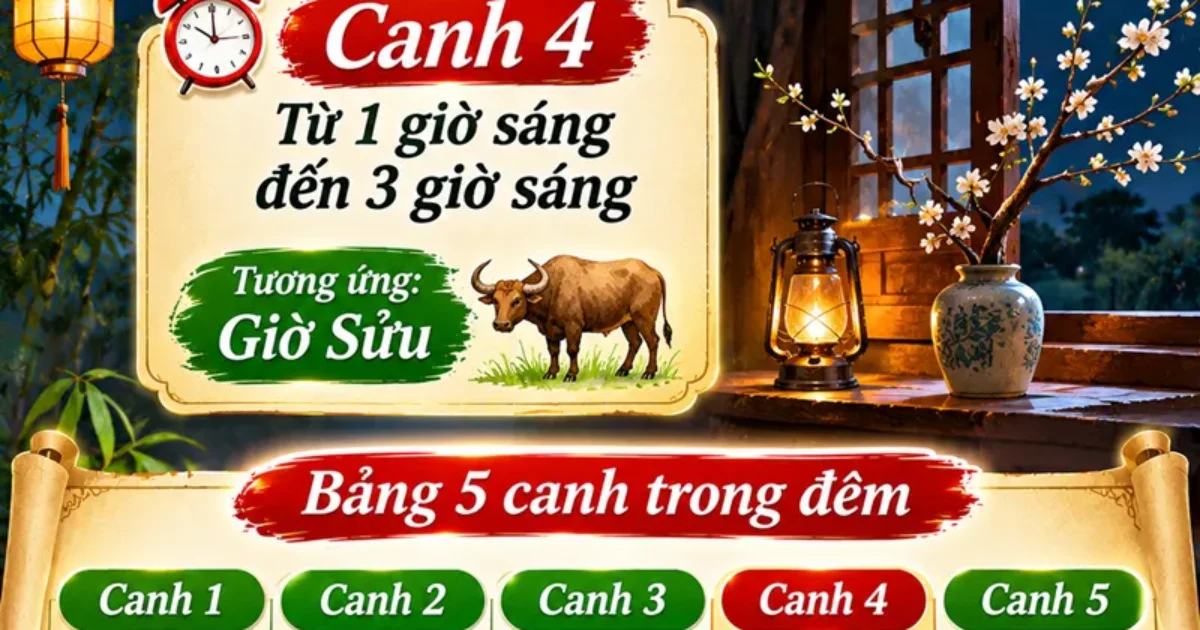
What Time Is the Fourth Watch? How People of Old Divided the Night into Five Watches
In traditional Vietnamese culture, expressions such as “the drum of the third watch”, “awake until the fourth watch” or “the cock crows at the fifth watch” often appear in literature,…
20/11/2026 · 8 min read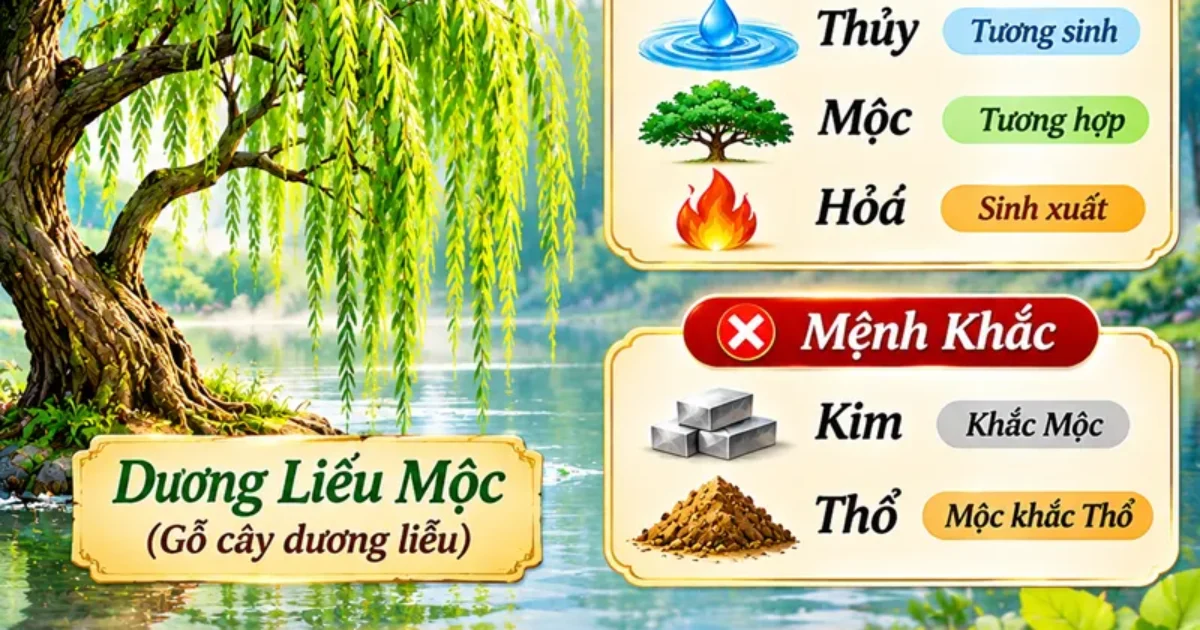
Which Elements Suit Willow Wood? Compatible and Clashing Elements and Lucky Colours
In the sixty-year Jiazi cycle, Willow Wood is a Na Yin element with a distinctive image. Not an ancient hardwood tree or a vast forest, Willow Wood represents the willow,…
19/11/2026 · 15 min read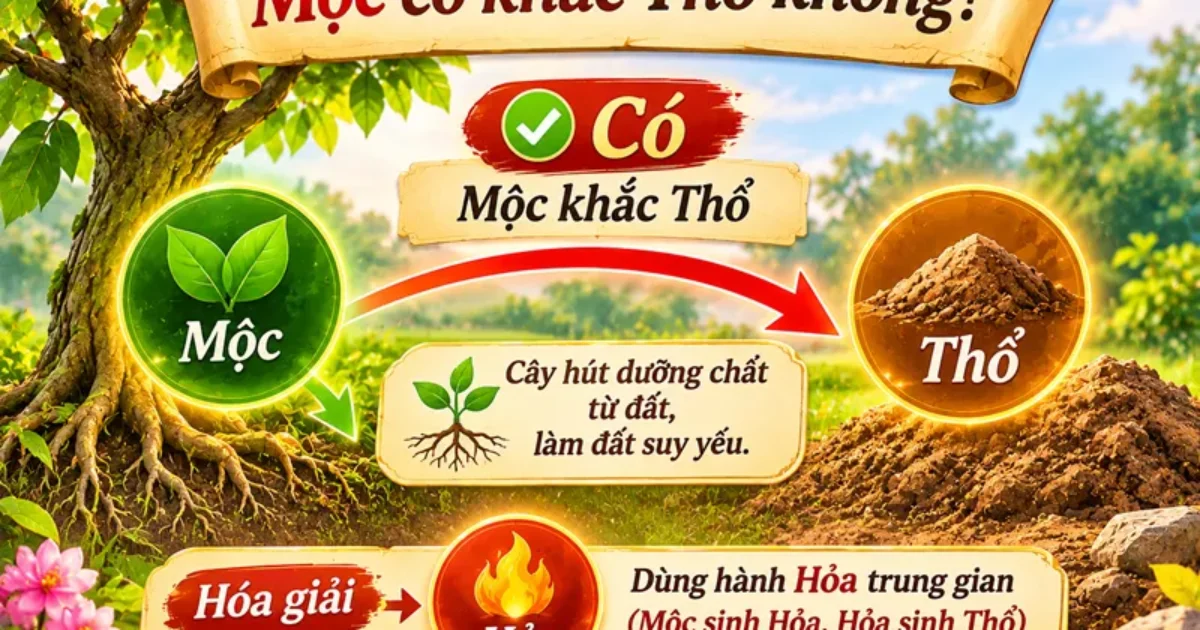
Does Wood Control Earth? Causes and Remedies in the Five Elements
In five-element feng shui, Wood and Earth have a controlling relationship. Wood represents trees, growth and development, while Earth represents land, stability and nourishment. This difference leaves many people unsure…
18/11/2026 · 10 min read