
Good days
What Is a Good Day? How to Find Yellow Path Days by Feng Shui
What is a good day? Learn about Yellow Path days, auspicious stars, the Twelve Day Officers, the Twenty-Eight Mansions and how to choose the right day for important matters.

A good day is a day considered favorable under Eastern calendar, feng shui and folk belief systems. In traditional belief, choosing a good day expresses the hope that work goes smoothly, the family stays safe and important plans get off to a good start.
A good day is also called an auspicious day. A concept often met when choosing days is the Yellow Path day, determined by the traditional calendar system and specific day-selection rules.
Choosing a good day can be based on many factors, such as Yellow Path days, auspicious stars, the Twelve Day Officers, the Twenty-Eight Mansions, the heavenly stems, earthly branches and the age of the person carrying out the task. Depending on the school, how these factors are combined and weighted may differ.
Good days are usually consulted for weddings, groundbreaking, moving house, grand openings, buying a car or setting out on a journey. However, this is a traditional belief; there is no reliable scientific evidence that choosing a day can guarantee success. Preparation, practical conditions and each person’s decisions still play an important role.
Factors that determine a good day in traditional belief
In Eastern day-selection methods, there is no single standard used by every school. Some common factors considered include Yellow Path days, auspicious stars, the Twelve Day Officers and the Twenty-Eight Mansions.
| Factor | Traditional meaning | How it is used when choosing a day |
| Yellow Path day | A day considered auspicious in the traditional calendar | Consulted when choosing the date for important undertakings |
| Auspicious stars | Stars classed as good in each day-selection system | Consider good stars that suit the specific purpose |
| Twelve Day Officers | A system of 12 officers tied to different meanings of the day | Match the officer with the task to be carried out |
| Twenty-Eight Mansions | A system of 28 lunar mansions used in some traditional calendar methods | Consult each mansion’s meaning according to the school |
1. What is a Yellow Path day?
A Yellow Path day is a day considered favorable in some traditional Eastern calendar systems. In folk belief, the day has auspicious factors suitable for carrying out important undertakings.
People choosing days usually match a Yellow Path day with a specific purpose, such as a wedding, grand opening or moving house. However, a Yellow Path day doesn’t mean every activity is suitable in every situation.
When choosing a day, also check the other factors in the method you use and consider the practical conditions of the task.
2. Auspicious stars and their meaning in choosing days
Auspicious stars are the stars considered good in some traditional day-selection systems. Depending on the method, the list of stars and their meanings may differ.
Some star names commonly found in calendar and feng shui texts include Heavenly Virtue, Monthly Virtue, Heavenly Joy and stars interpreted as favorable for particular groups of activities.
When choosing a day, don’t just count the good stars and conclude that it is the best day. Identify the calendar system used, the purpose of the task and the factors that school considers.
3. What are the Twelve Day Officers?
The Twelve Day Officers are a system of 12 officers usually used as a reference for the character of a day in the traditional calendar.
The twelve officers are:
- Establish
- Remove
- Full
- Balance
- Stable
- Initiate
- Destruction
- Danger
- Success
- Autumn
- Open
- Close
In some day-selection methods, the Open, Success, Stable and Full officers are usually seen as favorable for certain activities. However, the choice also depends on the specific purpose and each school’s rules.
For example, a day considered suitable for one activity is not necessarily suitable for all others. So match the officer’s meaning with the planned activity rather than applying one general list to every case.
4. What are the Twenty-Eight Mansions?
The Twenty-Eight Mansions are a system of 28 lunar mansions used in some traditional Eastern calendar methods. Each mansion has its own name and meaning in the corresponding system of interpretation.
In day selection, some mansions are classed as favorable for certain activities. However, how good and bad mansions are judged and how widely they apply are not entirely the same across texts.
If you use the Twenty-Eight Mansions to choose a day, consult a consistent calendar source and don’t draw conclusions from the mansion’s name alone while ignoring other factors.
Why choose good days by age?
In traditional feng shui, a day considered good in general may not suit everyone. So some methods also check the planned day against the age of the person named on, or representing, the undertaking.
The factors usually considered are the heavenly stems, earthly branches and the harmony and clash relationships in the calendar system used.
Compatibility between age and day
Heavenly stems and earthly branches are used to determine relationships such as harmony, clash or other combinations in traditional belief. For example, the common Three Harmonies groups are Monkey – Rat – Dragon, Tiger – Horse – Dog, Snake – Rooster – Ox and Pig – Rabbit – Goat.
In some day-selection methods, people prefer days whose relationship with the age of the person carrying out the task is considered favorable.
However, don’t assume that every day whose branch clashes with your age is absolutely unusable. The result also depends on the day-selection method, the purpose of the task and the factors compared.
Should you avoid days that clash with your age?
In folk belief, a day that clashes with one’s age is one of the factors weighed when choosing a date for a wedding, groundbreaking or grand opening.
If you want to choose a day by feng shui, determine your exact birth date, lunar year and the purpose of the task before looking it up. Also distinguish traditional rules from practical requirements such as work schedules, weather, legal procedures or the convenience of those involved.
Checking age should be used as a form of cultural reference, not the sole basis for important decisions.
Activities for which people usually choose good days
Traditionally, choosing a good day is usually tied to important family, work and business events.
| Category | Examples | Purpose in traditional belief |
| Weddings | Engagement, welcoming the bride, holding the wedding | Hoping for a harmonious, lasting marriage |
| Construction | Groundbreaking, pouring the roof, topping out | Hoping the construction goes smoothly and the family stays safe |
| Home | Moving into a new home | Hoping the new home is stable and harmonious |
| Business | Grand opening, opening a shop | Expressing hopes for a thriving business |
| Work | Signing contracts, starting projects | Setting a positive mindset at the start |
| Travel | Setting out, traveling far, buying a car | Hoping for a safe journey |
Choosing a good day for a wedding
Weddings are one of the occasions for which families often weigh auspicious dates. By custom, the date may be chosen based on the lunar calendar, the ages of the bride and groom and traditional rules.
Besides feng shui, the two families should prioritize agreement, arrangements, health and the guests’ schedules. A suitable wedding date should offer both spiritual meaning and practical feasibility.
Choosing a good day for groundbreaking and moving house
When building a house or moving to a new home, some families choose the day by custom to feel at ease and express their hopes for a stable life.
For construction, prioritize legal paperwork, site conditions, weather and workplace safety. For moving house, arrange transport, handover times and related tasks.
Choosing a good day for a grand opening
Many shops and businesses consult good days when opening or starting operations. In traditional belief, this is a way of expressing hopes for prosperity and smooth progress.
However, business results also depend on product quality, market demand, cash flow, customer service and operating plans. Choosing an opening day should go hand in hand with thorough preparation in these areas.
Choosing a good day to set out or buy a car
Some people choose a day to set out, take delivery of a car or start a long journey so they feel more at ease.
Whatever custom you follow in choosing the day, still put road safety first, check the vehicle, follow the weather and prepare all the necessary documents.
A simple way for beginners to choose a good day
If you want to look up good days yourself, you can follow the process below.
Step 1: Identify the task. Be clear whether you are choosing a day for a wedding, grand opening, groundbreaking, moving house or setting out. Each task may use different criteria.
Step 2: Set the expected time frame. Choose a month or range of dates that fits your actual plans, then look up the corresponding lunisolar calendar.
Step 3: Check Yellow Path days and calendar factors. Consult Yellow Path days, day officers and stars in one consistent calendar system.
Step 4: Check against age if needed. Identify the birth year of the person representing the event and consider the stem-branch relationships under the chosen method.
Step 5: Compare with practical conditions. Check work schedules, weather, procedures, budget and the convenience of those involved before deciding.
This approach helps you understand why a day is chosen and avoid relying entirely on a single good or bad result in the calendar.
Look up good days at Treasure Land Feng Shui
If you want to learn more about Yellow Path days, the lunisolar calendar, the custom of choosing days and Eastern feng shui ideas, you can visit Treasure Land Feng Shui for related content.
When looking up, be clear about the purpose of the task, the expected time frame and any age data the chosen method requires. If you need an exact date, check the calendar for the specific year rather than relying on a general table of good days.
Good days can carry spiritual and cultural meaning for many families. Even so, the success of an undertaking still depends heavily on planning, ability to carry it out, practical conditions and how each person solves problems.
Conclusion
What is a good day? It is a concept in traditional calendar culture and feng shui, referring to days considered favorable for certain activities. Choosing a day may be based on Yellow Path days, auspicious stars, the Twelve Day Officers, the Twenty-Eight Mansions and compatibility with age, depending on the method.
To choose a suitable day, be clear about the task, look up the calendar for the right year and weigh practical conditions. Treat choosing days as a form of cultural reference while focusing on preparation and responsible action.
You can visit Treasure Land Feng Shui to learn more about the lunisolar calendar, Yellow Path days and Eastern feng shui knowledge.
Editorial information
 Written byTechnical & Visual Design TeamThe unit that designs visual diagrams and keeps the website secure.
 Reviewed byContent Review BoardThe unit that screens material and verifies its accuracy.
Last updated: 21/11/2026
References
- JAHH 2019 PDF
- Aslaksen, The Mathematics of the Chinese Calendar
- Ho Ngoc Duc, Leipzig University
- UNESCO, Twenty-Four Solar Terms
- Truong Anh Thuan, The Hiep Ky calendar under the Nguyen dynasty
- Smith, Chinese Almanacs (book review)
- Smith, Fortune-tellers and Philosophers (book review)
- Ziwei doushu, Wikipedia
- Bruun, An Introduction to Feng Shui
- Feuchtwang, LSE eprints
- Bourassa & Peng 1999
- Bond, Feng Shui and Condominium Prices
Content follows our editorial standards of Treasure Land Feng Shui. Results are for reference, based on traditional beliefs.
Related articles

What Is the Su Xi Hour? Meaning, Calculation and What to Do
In the tradition of choosing days and hours, Su Xi (Swift Joy) is seen as a time that brings joy, luck and favorable turns in one’s affairs. People in the…
16/11/2026 · 9 min read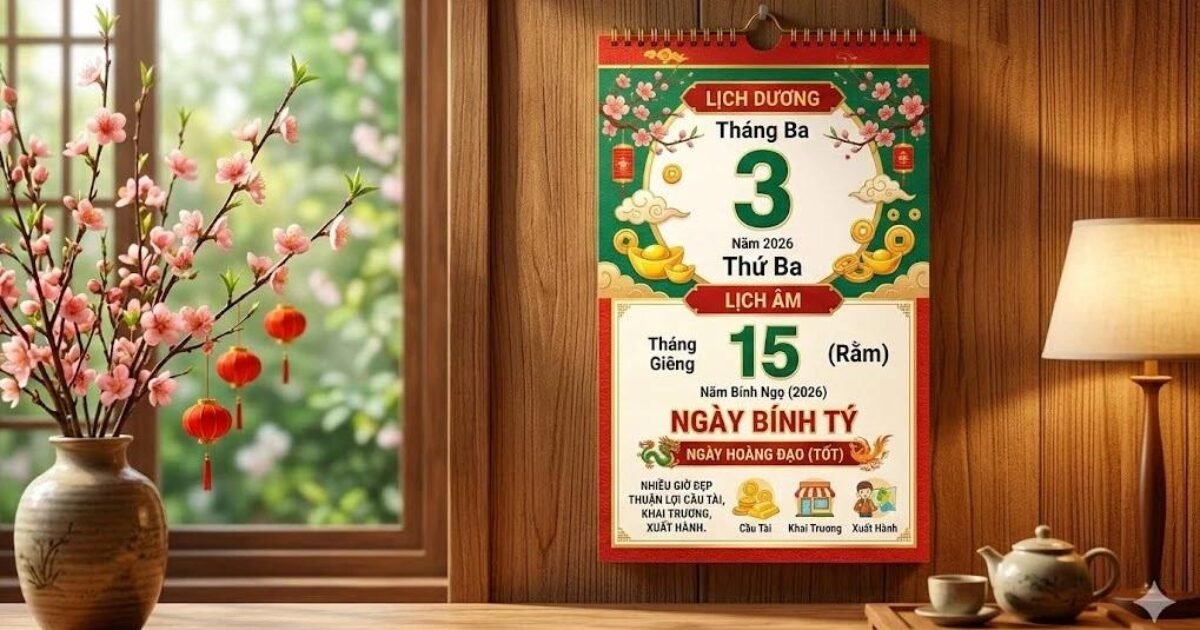
What Is the Jade Hall Hour? Meaning and What to Do to Welcome Good Fortune
In Eastern culture, choosing a good hour before starting something important has become a habit for many families. Alongside familiar slots like the Green Dragon, Bright Hall or Golden Coffer,…
15/11/2026 · 5 min read
What Is a Yellow Path Day? Meaning and How to Find Good Days
What is a Yellow Path day? Learn its meaning, how it differs from Black Path days and auspicious hours, and how to look up good days for each activity.
29/10/2026 · 6 min read