Culture
What Time Is Dusk? Folk Understanding and the 12 Zodiac Hours
“Drop by at dusk”, “wait until dusk before heading home” or “at dusk the chickens go to roost” are familiar phrases in everyday life. Although they are used all the time, not everyone can say exactly what time dusk is, especially when converting to modern clock time.
Usually, dusk is understood as roughly 5 p.m. to 7 p.m.. It is the transition between day and night, when natural light fades, the sun begins to set and evening activities get under way.
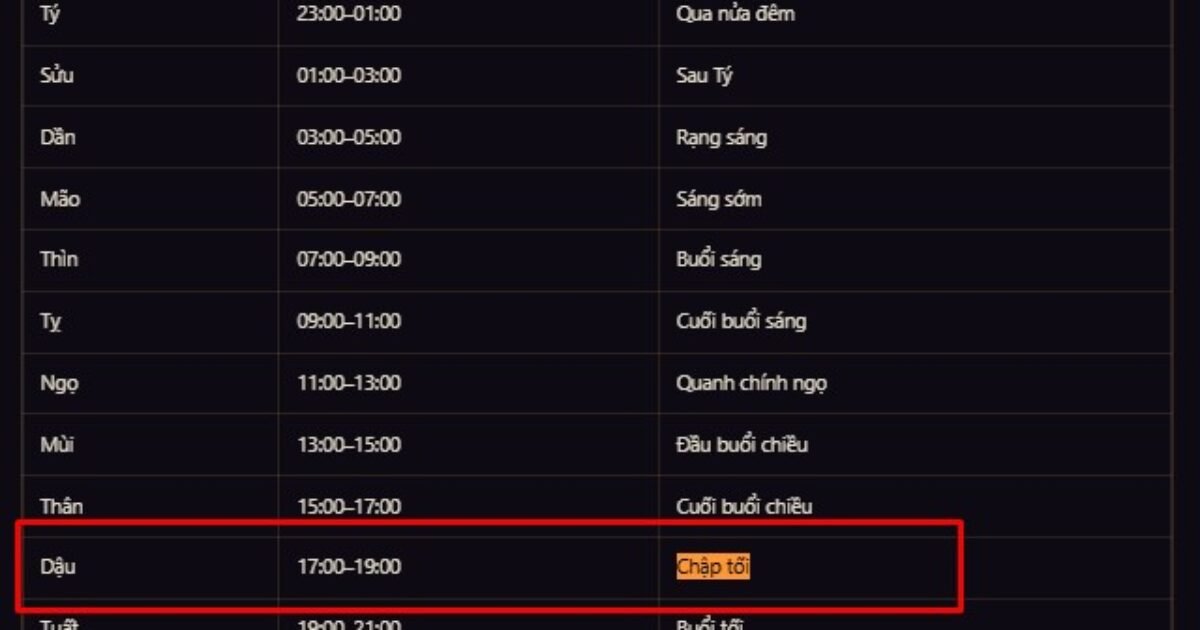
In the ancient system of 12 earthly branches used to tell time, this period corresponds to the Rooster hour. However, dusk is a name based on light and daily routine, so it has no fixed boundary like a clock time.
What time is dusk in everyday speech?
If someone arranges to meet at dusk, most of us think of a time around 5:30 to 6:30 p.m. The sky is no longer as bright as in the afternoon but not yet fully dark.
In the countryside, dusk is often associated with people returning after a day’s work, chickens looking for a place to roost, kitchen smoke rising and houses switching on their lights one by one.
In the city, the more obvious signs are street lights coming on, crowds leaving work and the last sunlight disappearing behind the buildings.
When it gets dark also depends on the season and location. In summer daylight may last longer, while winter often brings an earlier dusk.
So dusk is not exactly the same as 6 p.m. It is a relative period, defined by the change in natural light.
Which zodiac hour is dusk?
In the traditional division of time, a day and night consist of 12 branch hours. Each branch hour equals two modern hours, named in turn Rat, Ox, Tiger, Rabbit, Dragon, Snake, Horse, Goat, Monkey, Rooster, Dog and Pig.
The period from 5 p.m. to just before 7 p.m. is called the Rooster hour.
The Rooster branch is associated with the rooster in the 12-animal zodiac. In folk explanation, this is when chickens return to the coop after a day of foraging, and also when people finish most of their outdoor work.
This match between daily routine and traditional timekeeping is why the Rooster hour is often linked with dusk.
Time markers within the Rooster hour
| Beginning of the Rooster hour 17:00–17:40 Late afternoon | Middle of the Rooster hour 17:40–18:20 Twilight | End of the Rooster hour 18:20–19:00 Early evening |
This is a division of the Rooster hour into three equal parts for reference, not fixed markers of sunset.
In this reckoning, the middle of the Rooster hour is usually the period closest to what many people picture as dusk. However, dusk in everyday language need not coincide with the middle of the Rooster hour.
Are dusk and early evening the same?
The two terms are close in meaning but are used with slightly different nuances.
“Early evening” usually refers to the end of the afternoon, when the day is about to end. It can cover a broader span, depending on the context.
“Dusk”, by contrast, emphasizes the moment the light changes from bright to dark. It is an in-between time, no longer clearly daytime but not yet fully night.
For example, “I got home in the early evening” only gives a rough time, whereas “I got home just as dusk was falling” helps the listener picture the scene at that moment.
Another word often used on this topic is “twilight”. It describes the dim light when the day is ending or has just begun. So twilight applies not only to the evening but also to dawn.
Is dusk 6 p.m.?
6 p.m. can be seen as a typical time for dusk, but it is not always accurate.
The time of sunset varies by season and by place. On some days it is already fairly dark at 6 p.m.; on others there is still enough light to see clearly.
So in conversation, “around dusk” usually doesn’t require minute-level precision. Listeners estimate it from context and daily habits.
If you need to schedule something on time, such as picking up guests, holding an event or traveling, use a specific time like 5:30 or 6 p.m. rather than just saying dusk.
What does dusk mean in traditional life?
Before clocks became common, people often told the time by the sun’s position, the cock’s crow, the light and familiar daily activities.
Morning was when work began, noon was when the sun stood high, and dusk signalled that a day of work was drawing to a close.
In farming life, dusk had a clear meaning. It was when field workers packed up their tools, brought the buffalo and cattle home, prepared dinner and rested.
More than just a time marker, dusk also appears in many stories, poems and memories of village life. The image of a village road fading in the evening light, people calling each other home for dinner or the first lamp being lit all evoke a sense of closeness and peace.
That is why the traditional word for dusk is still used today, even though people now tell the time by phones and clocks.
Is the Rooster hour at dusk good or bad in feng shui?
In traditional feng shui, the Rooster hour belongs to the Metal element and is Yin. This period is often associated with drawing in, ending the day’s activity and getting ready to rest.
However, you cannot conclude that the Rooster hour is always good or always bad.
When choosing auspicious days and hours, people usually go by the earthly branch of the day to decide whether the Rooster hour is among the good hours. The same 5 p.m. to 7 p.m. slot can have a different auspicious or inauspicious character on different days according to the traditional calendar.
Some families consult the Rooster hour to hold offerings, set out on journeys, open businesses or do important things. This choice belongs to folk belief, not to rules confirmed by science.
For tasks that require high precision, give priority to practical conditions, safety and a suitable schedule.
Does dusk start at sunset or before?
To be more precise, three moments should be distinguished: the golden hour, sunset and dusk.
The golden hour is the end of the day when the sun approaches the horizon and the sky often shows shades of yellow, orange or red. It is also a time many people love for watching the scenery.
Sunset is the moment the upper edge of the sun disappears below the visible horizon.
After sunset, the sky does not turn black immediately. Light scattered in the atmosphere still creates a twilight period in which things remain visible for a while.
Dusk usually falls near this transition, especially when the light is no longer good enough for outdoor activity. Dictionaries define dusk as the time when darkness is just beginning.
So the 5 p.m. to 7 p.m. range is only a convenient convention linked to the Rooster hour, not a formula for when it gets dark everywhere.
Editorial information
 Written byTechnical & Visual Design TeamThe unit that designs visual diagrams and keeps the website secure.
 Reviewed byContent Review BoardThe unit that screens material and verifies its accuracy.
Last updated: 21/11/2026
References
- JAHH 2019 PDF
- Aslaksen, The Mathematics of the Chinese Calendar
- Ho Ngoc Duc, Leipzig University
- UNESCO, Twenty-Four Solar Terms
- Truong Anh Thuan, The Hiep Ky calendar under the Nguyen dynasty
- Smith, Chinese Almanacs (book review)
- Smith, Fortune-tellers and Philosophers (book review)
- Ziwei doushu, Wikipedia
- Bruun, An Introduction to Feng Shui
- Feuchtwang, LSE eprints
- Bourassa & Peng 1999
- Bond, Feng Shui and Condominium Prices
Content follows our editorial standards of Treasure Land Feng Shui. Results are for reference, based on traditional beliefs.
Related articles
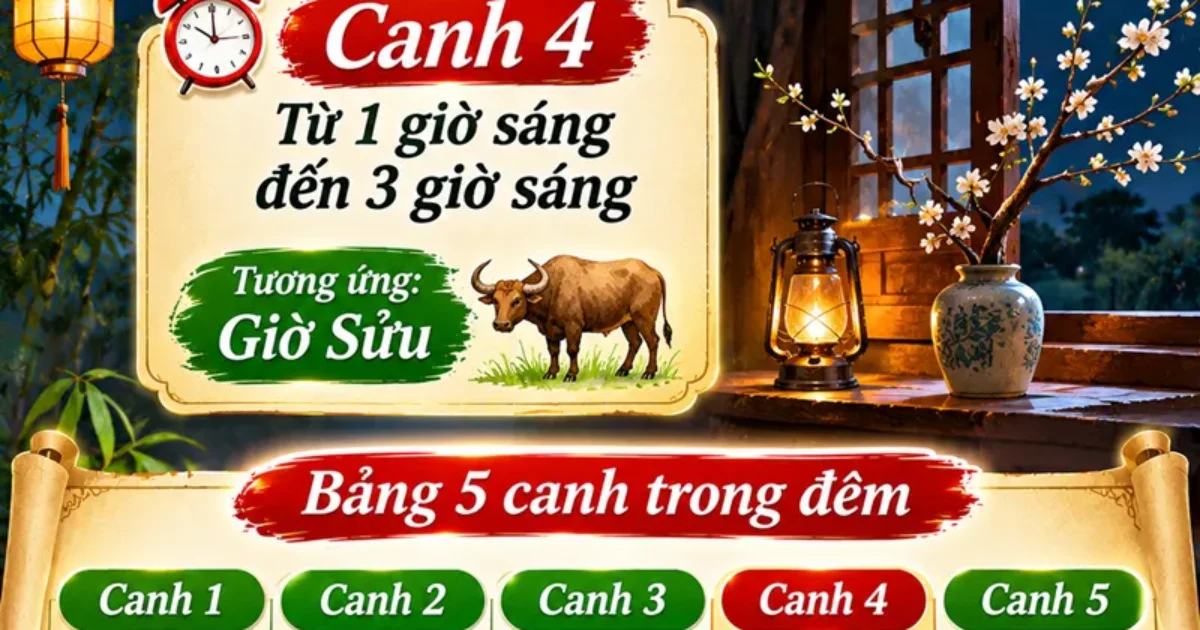
What Time Is the Fourth Watch? How People of Old Divided the Night into Five Watches
In traditional lunar-calendar culture, expressions such as “the drum of the third watch”, “awake until the fourth watch” or “the cock crows at the fifth watch” often appear in literature,…
20/11/2026 · 8 min read
Which Elements Suit Willow Wood? Compatible and Clashing Elements and Lucky Colors
In the sixty-year Jiazi cycle, Willow Wood is a Na Yin element with a distinctive image. Not an ancient hardwood tree or a vast forest, Willow Wood represents the willow,…
19/11/2026 · 15 min read
Does Wood Control Earth? Causes and Remedies in the Five Elements
In five-element feng shui, Wood and Earth have a controlling relationship. Wood represents trees, growth and development, while Earth represents land, stability and nourishment. This difference leaves many people unsure…
18/11/2026 · 10 min read