
12 Zodiac Animals
What Are the 12 Branch Hours? A Table of Hours by the 12 Zodiac Animals
What are the 12 branch hours? See the table of the 12 double-hours by zodiac animal, their time ranges and their meaning in the lunar calendar, Chinese astrology and traditional feng shui.
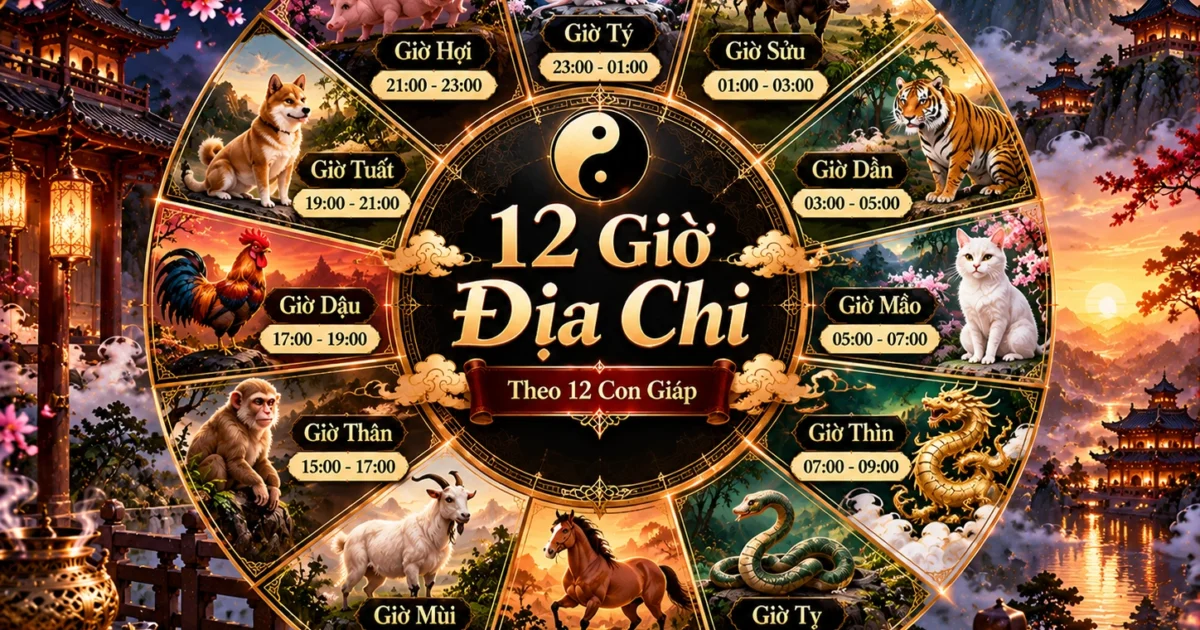
What are the 12 Earthly Branch hours? They are a way of dividing time by the 12 Earthly Branches in Eastern culture, matching the familiar 12 zodiac animals such as Rat, Ox, Tiger, Cat and the rest. Each branch hour equals about two hours on a modern clock, which helped people in the past tell the time of day before today’s timekeeping was common.
Besides naming time slots, the 12 Earthly Branches also appear in calendars, stems and branches, Zi Wei and many traditional feng shui beliefs. Knowing each hour helps you look up a birth hour, understand the lunar calendar and tell the old way of counting time from modern clock time.
What are the 12 Earthly Branch hours?
The 12 Earthly Branch hours divide a day into 12 periods, each tied to an Earthly Branch in the stem-branch system: Rat (Ty), Ox (Suu), Tiger (Dan), Cat (Mao), Dragon (Thin), Snake (Ty), Horse (Ngo), Goat (Mui), Monkey (Than), Rooster (Dau), Dog (Tuat) and Pig (Hoi).
In the usual conversion, each branch hour lasts two hours. The system is tied to the 12 zodiac animals, both naming the time slots and giving Eastern calendars their distinctive way of expressing time.
In this system a day starts with the Rat hour, from 11 pm the night before to 1 am. So when looking up a birth hour or checking a traditional calendar, note that the Rat hour spans two solar days in modern clock time.
Table of the 12 branch hours in modern clock time
Below is a table converting the 12 branch hours into slots on a 24-hour clock.
| No. | Branch hour | Zodiac animal | Time slot |
| 1 | Rat hour | Rat | 23:00 – 01:00 |
| 2 | Ox hour | Ox | 01:00 – 03:00 |
| 3 | Tiger hour | Tiger | 03:00 – 05:00 |
| 4 | Cat hour | Cat | 05:00 – 07:00 |
| 5 | Dragon hour | Dragon | 07:00 – 09:00 |
| 6 | Snake hour | Snake | 09:00 – 11:00 |
| 7 | Horse hour | Horse | 11:00 – 13:00 |
| 8 | Goat hour | Goat | 13:00 – 15:00 |
| 9 | Monkey hour | Monkey | 15:00 – 17:00 |
| 10 | Rooster hour | Rooster | 17:00 – 19:00 |
| 11 | Dog hour | Dog | 19:00 – 21:00 |
| 12 | Pig hour | Pig | 21:00 – 23:00 |
Quick way to remember: the Rat hour starts at 11 pm, then moves on to Ox, Tiger, Cat and the following branches; each slot is two hours apart until the end of the Pig hour.
The table above is the common conversion for looking things up. When checking a birth hour or building a chart with a specific traditional method, also check the conventions of the system you use, especially for times near the boundary between two hours.
Meaning of the 12 branch hours in Eastern culture
1. Telling the time of day
Before modern clocks were widely used, naming hours by branch helped people know when to go about daily life, work and perform rituals.
Today the system is still used when reading the lunar calendar, looking up a birth hour by zodiac animal or studying old calendar texts.
2. Link with the stems and branches system
The Earthly Branches are part of the stems and branches system; combined with the 10 Heavenly Stems they form a cycle of 60 pairs. This system is used to record years, months, days and hours in the traditional calendar.
So the 12 branch hours are not just names of time slots; they are tied to how time is expressed in many Eastern cultural texts.
3. Use in Zi Wei and birth hours
In traditional Zi Wei, the birth hour is key data for building a chart. You usually need to find your birth hour by branch before using the corresponding charting method.
For example, someone born at 6 am on a modern clock is usually placed in the Cat hour by the common table. If born close to a change of hour, check the exact birth time and the conventions of the charting method.
4. Link with feng shui and directions
In some traditional feng shui systems, the branches are also linked to directions, the five elements and rules of interpretation. These links are used depending on the school and the purpose of study.
However, knowing the branch hour alone does not let you draw full conclusions about someone’s destiny, personality or compatibility. Traditional methods usually combine many factors.
5. Zodiac signs and compatibility
The 12 branches are also the basis of the 12 zodiac signs, commonly used to name one’s age by birth year. In folk culture the branches are also analyzed by triple harmony, six harmony or the four-way clash.
Distinguish your zodiac sign by birth year from your branch hour by birth time. Both use the branch system but express different units of time.
How to find the branch hour from clock time
You can find the branch hour by matching the clock time against the table of 12 two-hour periods.
Step 1: Note the birth time or the time you want to check.
Write down the hour and minute in 24-hour format, for example 06:15 or 18:30.
Step 2: Match it against the table.
- 06:15 is in the Cat hour.
- 08:30 is in the Dragon hour.
- 12:15 is in the Horse hour.
- 16:00 is in the Monkey hour.
- 18:30 is in the Rooster hour.
- 22:00 is in the Pig hour.
Step 3: Check times near a boundary.
If the time is close to a change of hour, confirm the actual minute of birth. When building a chart, some methods also have their own conventions on local time or when the day changes.
Step 4: Use it for the right purpose.
If you only want to learn the traditional way of naming hours, the common table is usually enough. If you need to build a Zi Wei chart or look things up in a particular school, follow that method’s guidance.
Branch hours, Yellow Path hours and Black Path hours
These three concepts are related in traditional hour selection but they are not the same.
| Concept | Meaning |
| Branch hour | One of the 12 time periods tied to Rat, Ox, Tiger and the other branches |
| Auspicious hours | A time slot considered auspicious in some traditional calendar systems |
| Black Path hours | A time slot classed as less auspicious in the corresponding calendar system |
The branch hour tells you which two-hour period a moment falls in. Whether that slot is classed as Yellow Path or Black Path depends on the specific day and the rules of the system you use.
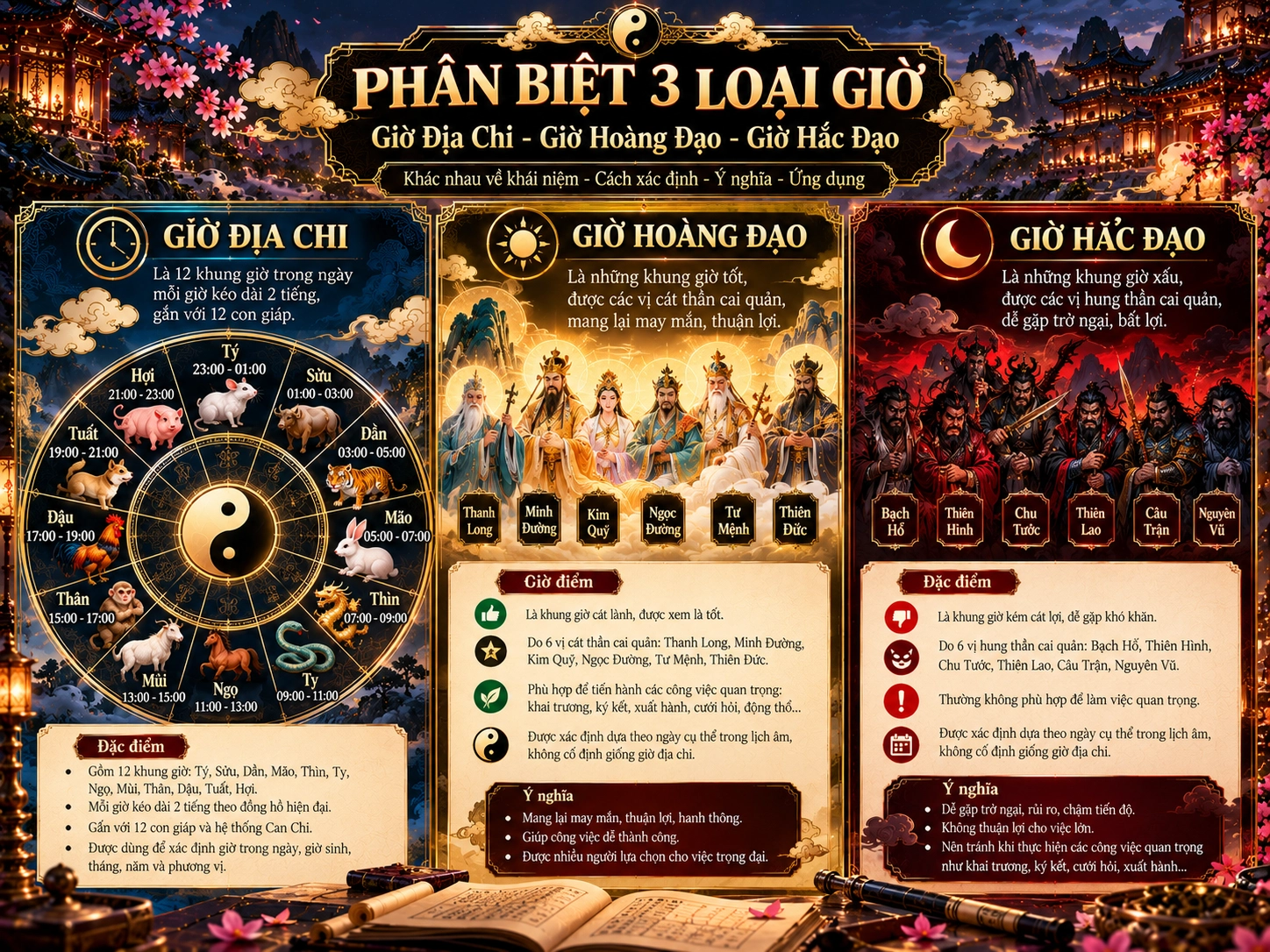
So you cannot conclude that a branch hour is always good or always bad on every day just from its name.
Learn more about Yellow Path hours, Black Path hours, the Great Peace hour
Conclusion
What are the 12 branch hours? It is a system dividing a day into 12 periods of about two hours each, each tied to an Earthly Branch in the stem-branch system. The table helps you read the lunar calendar, look up birth hours and explore the traditional uses of the branches.
To use it correctly, match the actual time against the table of 12 periods, watch the boundaries between hours and distinguish branch hours from Yellow Path hours or Black Path hours. When studying Zi Wei or feng shui, apply the conventions of your chosen method consistently.
Editorial information
 Written byTechnical & Visual Design TeamThe unit that designs visual diagrams and keeps the website secure.
 Reviewed byContent Review BoardThe unit that screens material and verifies its accuracy.
Last updated: 21/11/2026
References
- JAHH 2019 PDF
- Aslaksen, The Mathematics of the Chinese Calendar
- Ho Ngoc Duc, Leipzig University
- UNESCO, Twenty-Four Solar Terms
- Truong Anh Thuan, The Hiep Ky calendar under the Nguyen dynasty
- Smith, Chinese Almanacs (book review)
- Smith, Fortune-tellers and Philosophers (book review)
- Ziwei doushu, Wikipedia
- Bruun, An Introduction to Feng Shui
- Feuchtwang, LSE eprints
- Bourassa & Peng 1999
- Bond, Feng Shui and Condominium Prices
Content follows our editorial standards of Treasure Land Feng Shui. Results are for reference, based on traditional beliefs.
Related articles
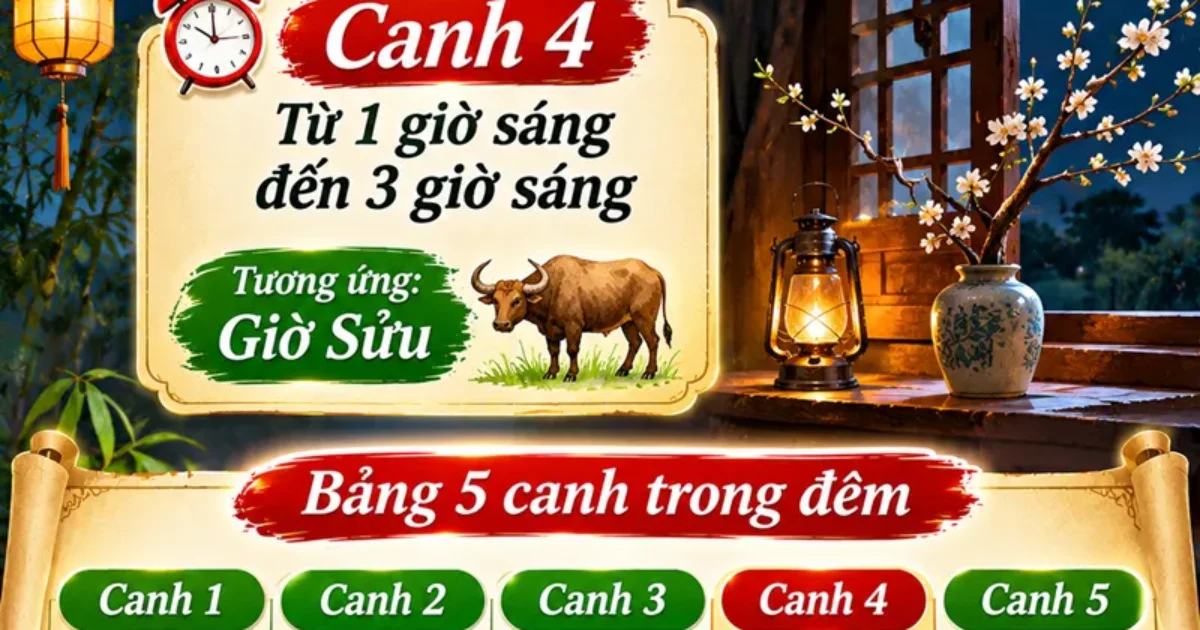
What Time Is the Fourth Watch? How People of Old Divided the Night into Five Watches
In traditional lunar-calendar culture, expressions such as “the drum of the third watch”, “awake until the fourth watch” or “the cock crows at the fifth watch” often appear in literature,…
20/11/2026 · 8 min read
Which Elements Suit Willow Wood? Compatible and Clashing Elements and Lucky Colors
In the sixty-year Jiazi cycle, Willow Wood is a Na Yin element with a distinctive image. Not an ancient hardwood tree or a vast forest, Willow Wood represents the willow,…
19/11/2026 · 15 min read
Does Wood Control Earth? Causes and Remedies in the Five Elements
In five-element feng shui, Wood and Earth have a controlling relationship. Wood represents trees, growth and development, while Earth represents land, stability and nourishment. This difference leaves many people unsure…
18/11/2026 · 10 min read